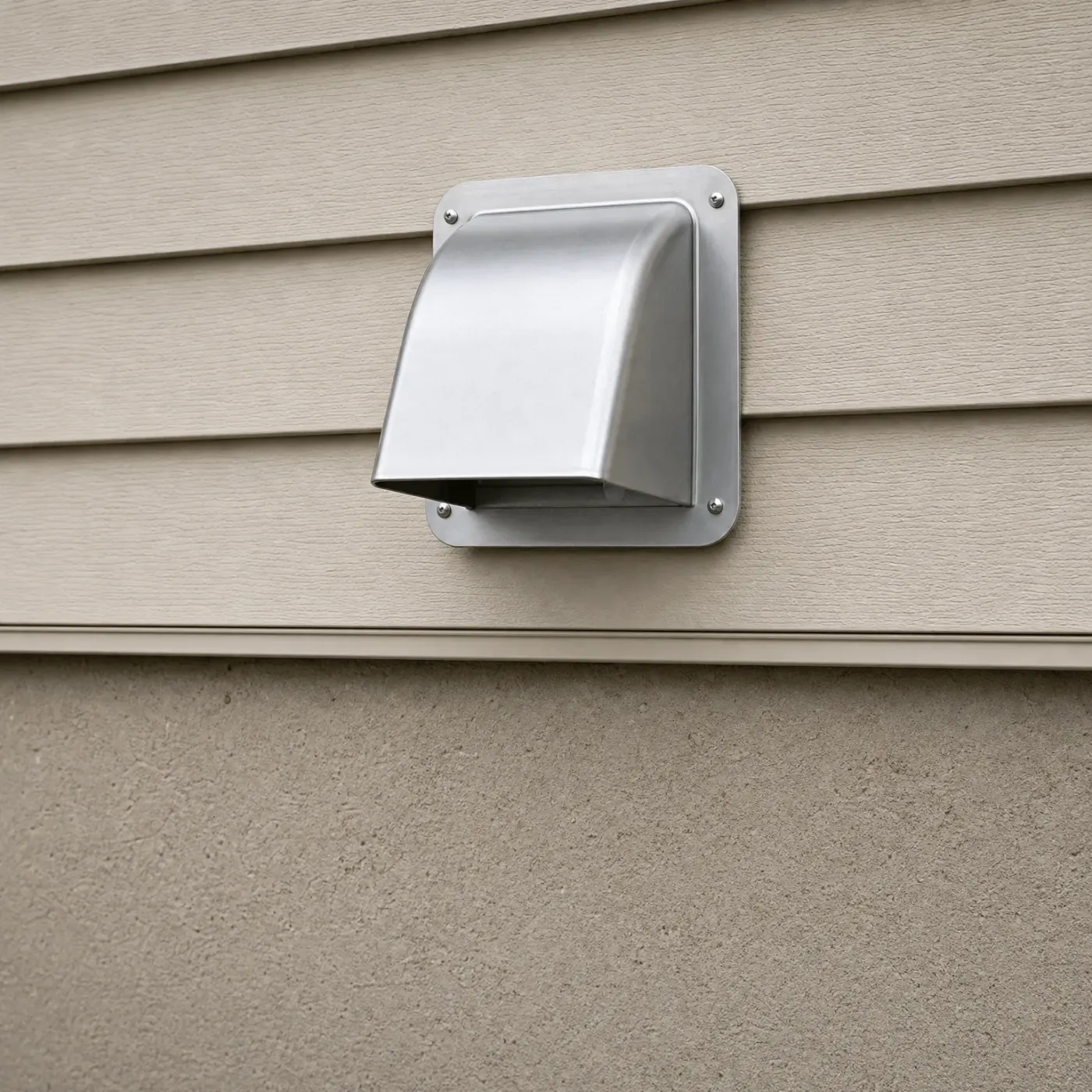
Vent clear, hood swinging free
This is what a clean vent looks like. The hood sits open and the flap moves with the airflow, so hot air from the dryer pushes straight out past the siding and into the yard, not back into the laundry room.
A hot laundry room usually means your dryer isn't venting the way it should. Every load pushes hot, damp air down that vent, and if the duct is clogged with lint or crushed somewhere behind the wall, that heat has nowhere to go but back into the room around the dryer. In Mississippi, summer already pushes humidity into the house, so a laundry room that can't vent properly feels worse than it would somewhere drier. The dryer also has to run longer to dry the same load, which means more heat thrown into that small room over a longer stretch of time. Since most homes here heat with electricity, people sometimes assume the dryer itself is broken or working too hard, when the real problem is the vent line not carrying air out like it's supposed to. A clogged vent is also a fire risk, not just a comfort one, so a laundry room that runs noticeably hot is worth checking rather than living with.


A dryer doesn't just tumble clothes. It pushes heated air across the load and out through a duct, and until that air actually clears the duct, it's still hot. Under normal conditions that's a short trip. But lint collects along the inside of the duct over time, and a duct that's narrowed by lint makes the dryer push harder to move the same air. Add a long run, or a few bends behind the wall, and the dryer is working against all of it at once. If a section back there is crushed or has come apart, that hot air may never make it outside at all. It just empties into the room. The vent hood outside matters too. Its flap should open while the dryer runs and close once it stops, and a flap stuck shut sends air right back into the house. In Mississippi, the air coming off a wet load already carries a lot of moisture, so once a vent is restricted, the laundry room ends up holding both the heat and the damp with nowhere for either to go.




Run a load and feel the wall behind the dryer. If it's hot to the touch, or the room is still warm an hour after the cycle ends, air isn't clearing the duct. You might notice the dryer taking two or three cycles to get clothes dry that used to finish in one. Lint around the vent hood outside, or barely any airflow when you hold your hand up to it, points the same direction. In a Mississippi summer, that heat stacks on top of air that's already thick with humidity, and your laundry room ends up the hottest, stickiest spot in the house. A blocked vent also means lint is sitting somewhere it shouldn't, and that's a fire risk worth taking seriously.
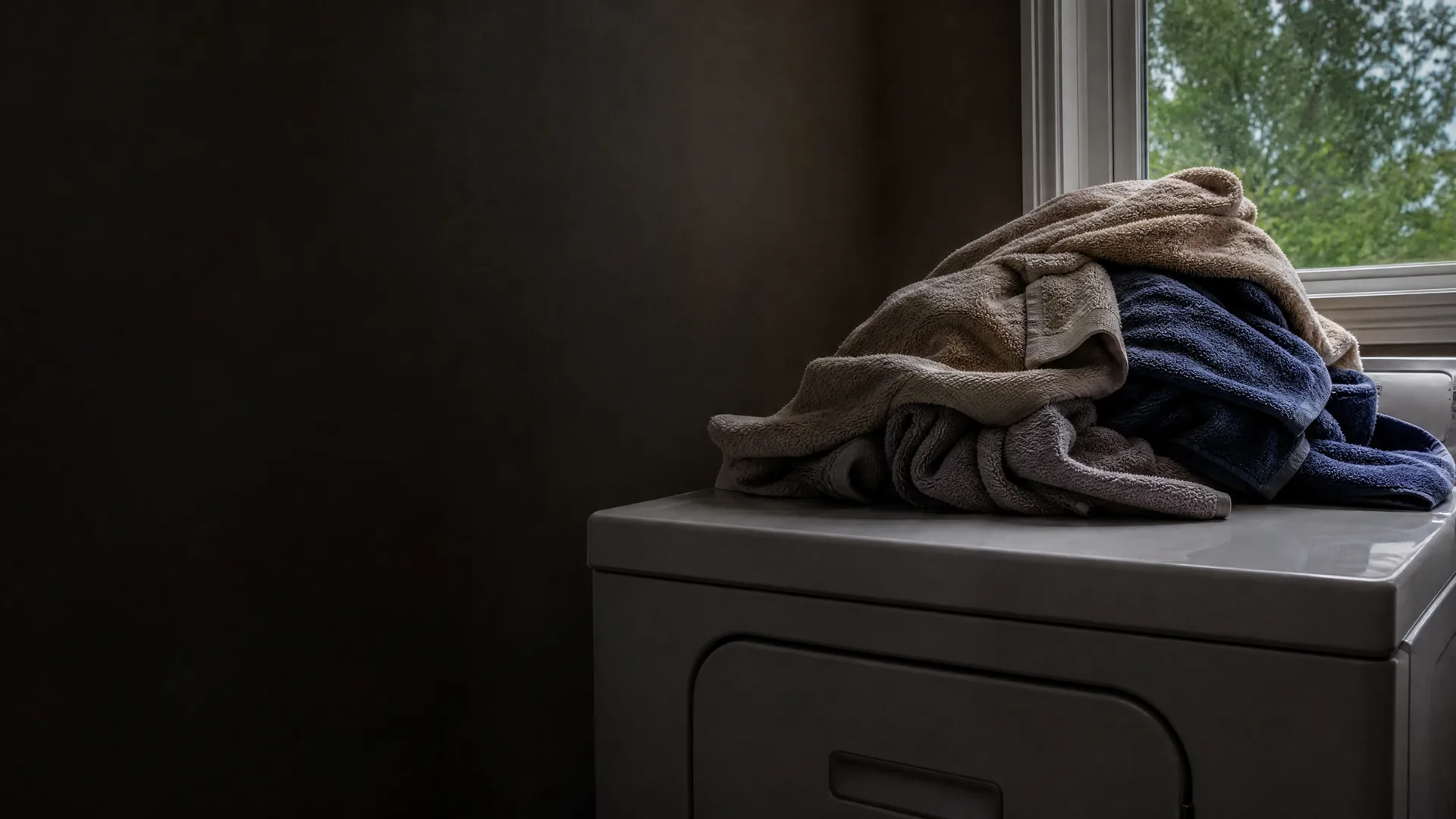
It's past eight on a weeknight and you're pulling the last load out, but the towels on top of the dryer are still damp. You've run this cycle twice already. The room is close and thick, worse than the air outside, and the mugginess that's been sitting over Mississippi all summer feels like it followed you in here. You press a hand to the wall behind the dryer and it's warm. You think about calling someone, then think about the part where you'd have to explain all this again to whoever picks up, and maybe again to the next one before you find someone who'll actually come out. You fold the damp towels anyway and leave the door open behind you.
A room that already runs hot every summer doesn't need a clogged vent making it worse. With the duct choked down, your dryer runs longer to finish each load, and all that extra heat and moisture stays in the room instead of going outside where it belongs. That adds to a laundry room that's already fighting the Mississippi air all summer. A vent cleared out moves that heat outside where it's supposed to go, and your dryer stops working overtime to finish what should be a normal load. Finding someone to clear it out usually means calling a few companies, explaining the same thing about your vent and your laundry room each time, and sitting with quotes trying to work out who actually knows what they're doing. You can skip that part. Answer a few questions about your dryer and your vent, and a contractor who handles this work reaches out to you directly, so you're not the one running down who to call.

This is what a clean vent looks like. The hood sits open and the flap moves with the airflow, so hot air from the dryer pushes straight out past the siding and into the yard, not back into the laundry room.

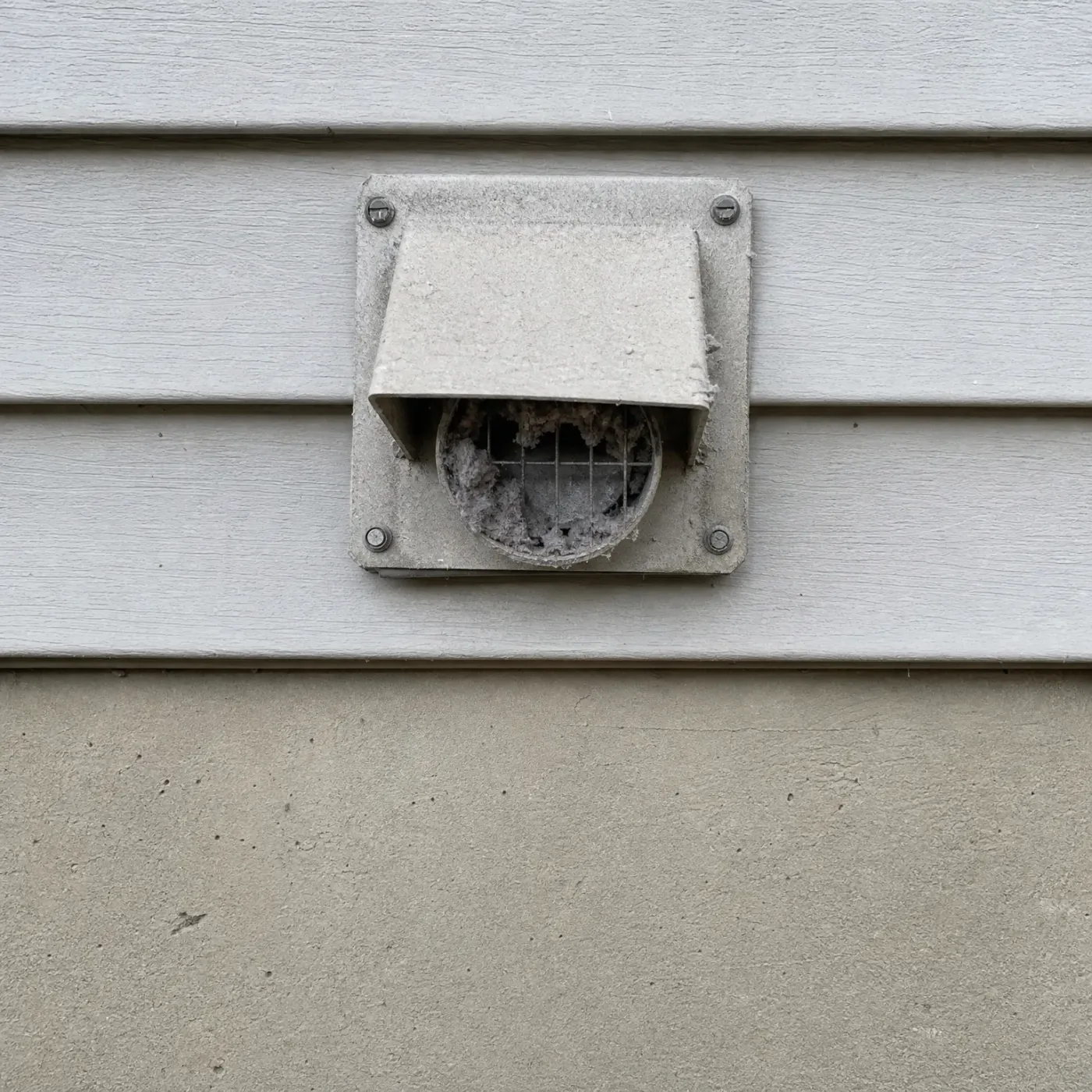
Lint has built up across the opening until the flap barely moves. Most of the air your dryer pushes out has nowhere to go, so it backs up into the duct and into the room with it.
Since most homes here heat with electricity and pay 14.03 cents per kilowatt-hour, a dryer stuck running extra cycles because of a clogged vent shows up on your bill. A clear duct gets the heat out in one cycle instead of two or three.
EIA-861 2025 statewide residential average
The heat in that room is coming from somewhere, and now you know where. A dryer vent that is clear sends hot, damp air outside in one pass. A dryer vent packed with lint holds that heat behind the wall, and the only place left for it to go is back into the room you stand in to fold towels. Mississippi summers already push warm, heavy air into the house. A laundry room that runs hotter than the rest of the house, or stays warm long after the dryer shuts off, is telling you the duct is the problem, not the weather.
You could spend an evening searching for someone who cleans dryer vents, calling a few, explaining the same thing about the warm wall and the long cycles to each one, then sitting with quotes trying to guess which contractor actually knows what they're doing. Or you can skip all of that. Getting matched with a licensed contractor means you explain it once, and they follow up with you directly instead of you chasing them down.
None of this means the fix is instant or free. It means the part that used to take your evenings, the searching and the comparing, is handled. What's left is a laundry room that cools back down after a load instead of holding onto the heat until the next one starts.

Get the right pro for your dryer vent