

Signs your dryer vent is clogged in Mississippi

A local pro who cleans dryer vents gets in touch with you.

Find my pro

What are the signs my dryer vent is clogged?

You keep catching your clothes coming out hot instead of dry, or the top of the dryer feels warm to the touch. You're not the type to wait until something breaks to look into it, so before this turns into a bigger problem, or a fire risk, you want to know what to actually watch for. A clogged vent doesn't always announce itself clearly, so it helps to know the real signs.

Clothes that take two or more cycles to dry, or feel hot rather than dry at the end, mean the vent is likely clogged

A dryer pushes hot, damp air out through the vent with every load. When lint builds up inside that vent, the air has nowhere to go, so it backs up into the drum instead of leaving the house. That's why clothes stay damp, why a cycle that should take forty minutes stretches into two runs, and why the dryer itself gets hot to the touch on top or along the front panel. You might also notice a burnt smell, or see very little lint in the trap when you empty it, since most of it is trapped further down the line. With Mississippi's muggy summers already working against how fast laundry dries, a clogged vent makes the problem worse, not better.

A white hooded dryer vent with a square screwed-on flange mounted on gray horizontal lap siding, above a concrete foundation wall edged with gravel stones.

Vent flap closed and clear

Step outside and look at the hood on the wall. The flap sits closed except when the dryer is running, and when it opens you feel steady warm air pushing out. No lint sits on the louvers or the screen behind them. Air moving out this well means the line between the dryer and the outside wall is open its full length.


A lint-clogged hooded dryer vent mounted on light gray horizontal lap siding above a concrete foundation wall.

Lint packed in the hood

The flap hangs open on its own, propped by lint built up in the hood. Air barely moves when you hold your hand near it, even mid-cycle. Lint like this usually means more sits further back in the vent run. In a Mississippi summer, a vent this blocked traps heat and moisture right where the line meets the house.

Clogged Vent or Running Clear

Clogged vent

  • A load that used to take 40 minutes now runs close to an hour, or you're running it twice to get clothes dry.
  • The dryer, not just the exhaust air, feels hot on top or along the front panel when you put a hand on it.
  • Lint collects around the lint trap housing or behind the dryer that you didn't put there.
  • The room the dryer sits in gets noticeably warmer or more humid during a cycle than it used to.
  • You smell something faintly like burning, especially partway through a longer cycle.
  • The outside hood barely moves or you feel weak, warm air instead of a strong push when the dryer is running.

Vent running clear

  • Clothes come out dry and cool to the touch at the end of a normal cycle, no second run needed.
  • The dryer's outer panel stays close to room temperature through the whole cycle.
  • Lint stays in the trap where you pull it out each load, not scattered around the unit.
  • The laundry room temperature and humidity stay about the same whether the dryer is running or off.
  • No burning smell at any point, even on longer loads or heavier fabrics like towels.
  • Air pushes out the outside hood with force the whole time the dryer runs, and the flap swings fully open.
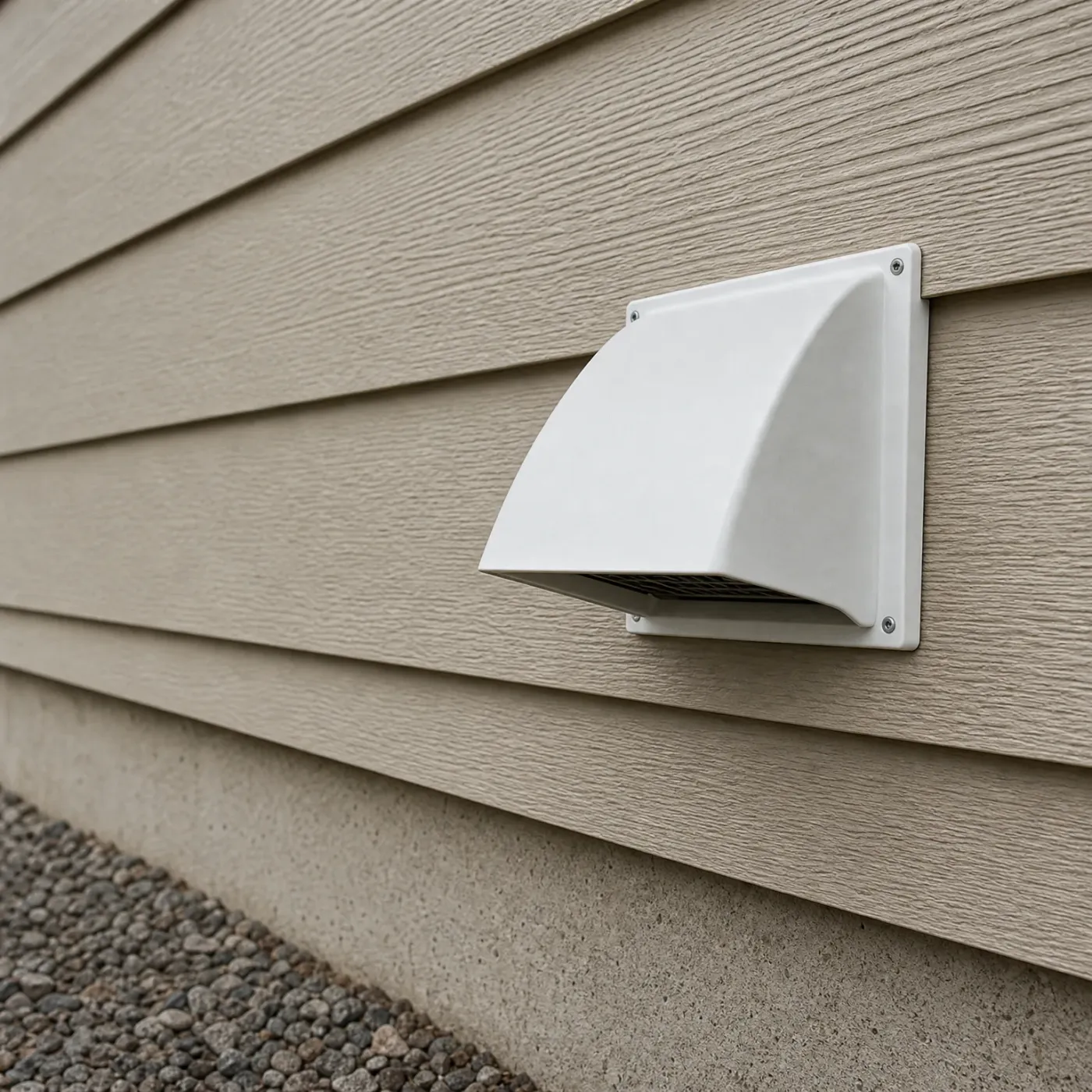
A white hooded louvered vent mounted on beige horizontal lap siding above a stucco foundation wall bordered by river rock gravel.

Clear exhaust opening

The cover sits flush against the siding and the screen behind it is open. Lint has not built up on the mesh, so air has a clear path out of the house. A vent in this shape lets the dryer push moisture outside the way it was built to.

A white plastic hooded dryer vent with a lint-covered screened opening mounted on beige horizontal vinyl siding above a concrete foundation.

Lint packed in the screen

The mesh behind the hood is dark with lint and grime, and the opening looks smaller than it should. That buildup blocks the air the dryer is trying to push out. Left alone, lint keeps collecting on top of what's already there.

Why does my laundry room feel so warm and damp?

With summers already muggy here, a clogged vent adds heat and moisture the dryer should be pushing outside. You might notice the laundry room feels warmer than the rest of the house while a load runs, or the air in there smells faintly like hot lint. Condensation can show up on the wall behind the dryer or on nearby windows. Clothes come out of the dryer smelling musty even though they just finished a cycle. Lint may be visible around the dryer door seal or gathering in the hose connection. Left alone, the moisture and heat that should be venting outside stay in the house instead, and the lint built up in the line is combustible.

A square plastic dryer vent hood mounted on light-colored horizontal lap siding above a concrete foundation, with gray lint clogging its screened opening.
Before you get your dryer vent cleaning
A white hooded dryer vent cover mounted on beige horizontal vinyl siding above a concrete foundation wall with gravel at the base.
After you get your dryer vent cleaning
A white hooded exterior vent cover with a screened opening mounted on beige lap siding above a concrete foundation and gravel strip.

Matched to your dryer vent job

One request and the search for a pro is handled.

A local pro who knows dryer vents gets your details and gets in touch.

Get a dryer vent pro

Asking costs nothing, and the choice to hire stays yours.

A white plastic hooded dryer vent with a screened opening mounted on gray horizontal lap siding above a concrete foundation and gravel bed.
Air pushes out strong and steady, and the hood sits clean with no lint built up around the opening.
A white plastic dryer vent hood mounted on horizontal lap siding, clogged with gray lint at its lower opening, above a concrete foundation and walkway.
Lint has packed the opening solid, and the stains running down the foundation show it's been going on a while.
  1. Hot, moist air leaves the drum but can't push past the clog.

  2. Lint keeps collecting at the narrowest point in the vent run.

  3. Less air escapes outside, so heat and moisture back up into the duct.

  4. The dryer runs longer and hotter trying to finish the same load.

A woman in a long cream cardigan and jeans stands at an open wooden front door of a gray shingled house with stone-based porch columns, with a second person visible inside, and potted flowers and shrubs beside the entry.

What a clogged vent does in your house

You'll feel it first in the laundry room. A load that should finish and leave the room alone instead leaves it sticky, the air thick the way it gets outside in July. Touch the clothes and they're warm but not dry. Run your hand along the wall behind the dryer and it's warm too, which means heat that should be outside is sitting in your house instead.

It shows up on the power bill next, since electric dryers here are working the same motor and heating element longer and harder to push air through a blocked line. Left alone, the lint packed into that vent is also just fuel sitting next to a heat source. If you'd rather not keep checking the vent hood yourself every few weeks, the next step is getting matched with a contractor who handles dryer vent cleaning and reaches out to look at your specific setup.

A large weathered ceramic vase and a shallow wooden bowl sit on a rustic wooden table beside a window with linen curtains, with a blurred sofa with cushions and a hanging fabric panel in the background.
A bearded man in a plaid flannel shirt sits indoors looking out a window at snow-covered trees, with a steaming mug on the sill and wooden kitchen shelves behind him.
A bearded man in a navy T-shirt sits on a light-colored couch indoors, smiling while looking down at a laptop screen in the foreground, with a framed picture and a potted plant blurred behind him.

Power costs 14.03 cents per kilowatt-hour statewide

At 14.03 cents a kilowatt-hour, running a dryer twice to finish one load costs more than it should. A clogged vent is why that second cycle keeps happening, and clearing it is what stops you paying for it.

EIA-861 2025 statewide residential average

What a clogged vent tells you

  • Clothes that stay hot and damp after a full cycle are the clearest sign the vent, not the dryer, has a problem.
  • A laundry room that feels warmer and stickier than the rest of the house points to moisture backing up instead of venting out.
  • A vent hood with lint packed around the flap or stains running down the siding means airflow has been blocked for a while.
  • Runtimes creeping from 40 minutes toward an hour, or needing a second cycle, means less air is escaping outside.
  • A dryer that's hot on top or along the front panel is working harder than it should to push air through a clogged line.
  • A weak or barely moving airflow at the outside vent, instead of steady warm air, shows the path out is restricted.

Put the signs together and they all point the same way. Hot, damp clothes at the end of a cycle mean air isn't carrying moisture out the way it should. A sticky laundry room means that moisture is backing up into the house instead of leaving it. Lint packed around the hood flap or stains down the siding show the blockage has been building for some time, not something that happened this week. Longer runtimes and a dryer that runs hot to the touch are the machine working harder against a line that won't let air through. Weak airflow at the outside vent is the same problem seen from the other end of the duct.

None of these show up on their own without reason. A dryer vent is a straight job for air to do, push warm air out, and when it can't, everything upstream feels the strain, from the drum to the laundry room to your power bill. You already check on small things before they turn into bigger ones, and this is one of those times it's worth it. Catching it now, while it's still a cycle running long or a room feeling warm, means dealing with a vent that needs clearing. Waiting means dealing with a dryer that's been working against a blocked line for months, and a laundry room that's been holding onto heat and moisture it should never have had.

A woman in a gray turtleneck sweater stands near a window with snow outside, in a dimly lit living room with a lit Christmas tree, table lamp, sofa and bookshelf.
A woman in a cream knit sweater with her hair in a bun stands in a dimly lit living room looking out a large window at snow-covered evergreen trees, with a lamp, sofa, framed picture and lit candle behind her.
A woman in a thick gray knit sweater stands beside a window looking out at falling snow, with a dimly lit living room containing a lamp, sofa, string lights and a candle behind her.
A woman in a gray turtleneck sweater stands in a dimly lit room with a lit table lamp, framed picture and sofa, looking toward a window with snow outside.

Dryer Vent Cleaning

A dryer vent pro near you

Send it once and finding someone is no longer on you.

A smartphone with a blank green screen stands upright against a plain light gray background.
Duct and vent cleaningMississippi
Step 1 of 3

What kind of equipment?