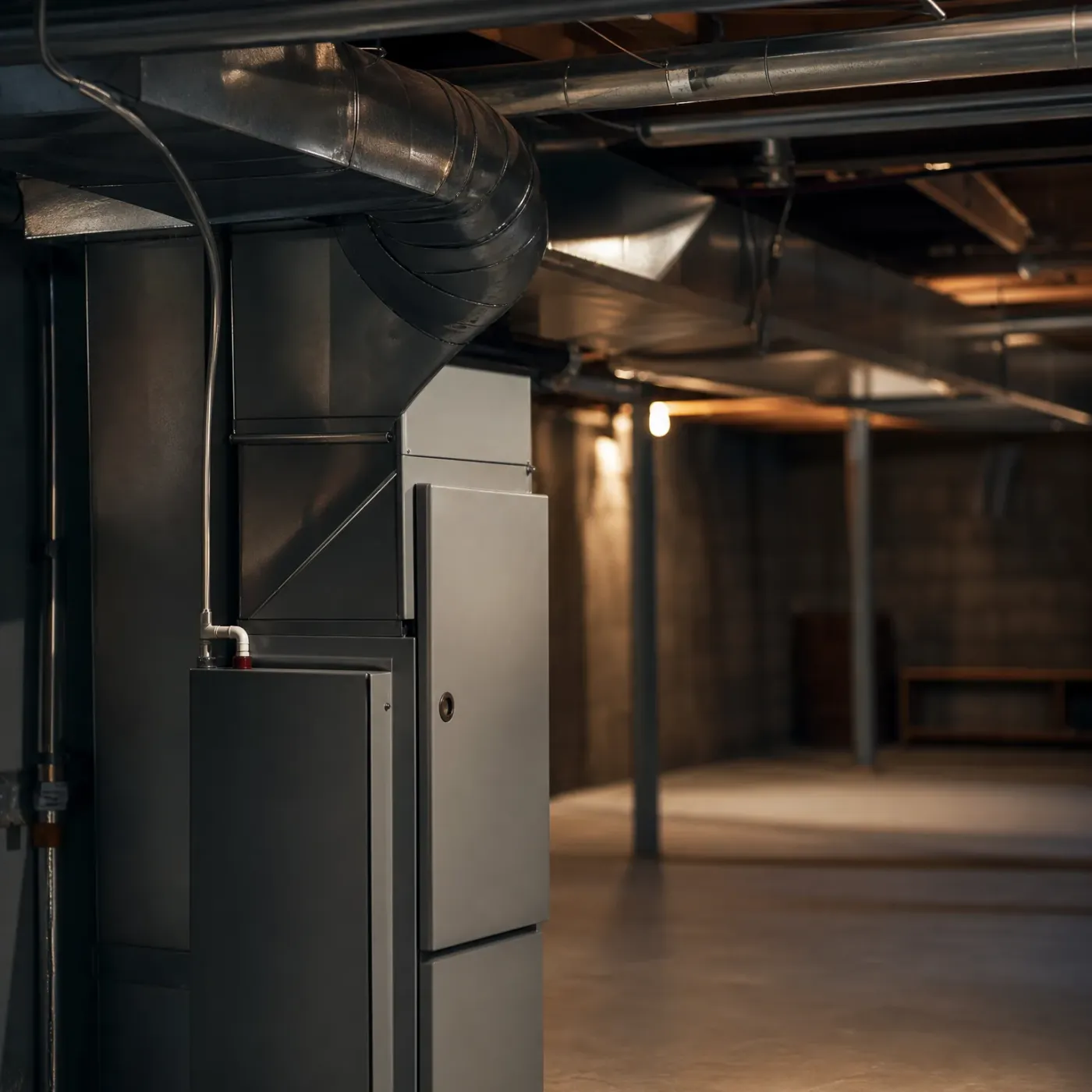
A basement interior with a gray furnace or air handler unit connected to large sheet-metal ductwork running along the exposed joist ceiling, with support posts and a concrete block wall in the dim background.

Get matched with a duct system pro in Hinds County

Musty smell from vents in Jackson, MS

That musty smell from your vents usually means moisture sitting somewhere in the duct system, often on the coil or in the ductwork itself. With Jackson summers as muggy as they are, that moisture has plenty to work with. This page gets into what's causing it and what duct cleaning actually involves, so you know what you're dealing with before anyone sets foot in your house.

Find my pro

That musty smell is almost always mold or mildew growing on a damp surface somewhere in the system, most often the evaporator coil or the inside of the ductwork near it. The coil stays wet for hours after the AC shuts off, and in Hinds County summers, with the air outside carrying so much moisture of its own, that coil can take a long time to fully dry between cooling cycles. Dust and debris sitting in the ducts gives mold something to feed on once moisture is there. A clogged drain line can add to it, letting water sit instead of draining away. The smell means there's active growth, not just dust blowing through. It won't clear up on its own, and running the system more only pushes the smell through the house faster. A proper cleaning reaches the coil and duct runs where normal filter changes can't.

An older man with gray hair and a beard, wearing a dark jacket dusted with snow, stands smiling in a dimly lit hallway with lamps and a living room visible behind him.
A gray-haired, bearded man in a dark snow-dusted coat stands smiling in a dimly lit entry hall with a staircase, a lit table lamp, a framed picture, and a living room visible through a doorway.
An older man with white hair and a beard, wearing a dark snow-dusted coat and scarf, stands in a warmly lit interior hallway with a framed landscape picture, a table lamp and a potted plant behind him, and a snowy view through a window at left.
A gray-haired, bearded man in a dark coat dusted with snow stands smiling in a dimly lit room with a lamp, mirror, framed art, and a sofa in the background.

Why does that smell keep coming back here?

  • Half the homes here were built by 1974

    Cooling runs May through October here, six months of the coil staying wet after every shutoff for mold to take hold on.

  • Heat runs November through March

    Heat only runs November through March, so for five months the system sits closed up with no airflow to dry anything out.

  • Cooling runs May through October

    Half the homes in Hinds County were built in 1974 or earlier, long enough for ductwork to have picked up damage that holds moisture.

ACS 2020-2024 · NOAA nClimDiv 1991-2020

Dim interior corner of a room with a ceiling air vent, a beige wall, a cream curtain beside a window showing bare trees, and a dark ceramic vase of flowers on a wooden side table behind a light upholstered sofa back.

Saturday afternoon in April, sun coming in through the living room windows, and you're finally getting around to dusting. You pull the lamp shades, run a cloth along the bookshelf, and then you look up at the ceiling vent and see the grille is gray with it, a soft film that's settled on the slats and drifted down onto the top of the TV cabinet and the picture frames below. You wipe the furniture clean, but twenty minutes later you can already see a thin new layer starting on the sill under the vent. The AC hasn't even kicked on much yet this spring. You just stand there looking up at it, wondering how long that's been blowing down on everything in the room.

What is that musty smell doing to your house

Turn on the AC and the smell comes with it, strongest in the room you spend the most time in. Check the return grille and you might find a gray film on the slats, or a dark ring just inside the duct where you can reach it. Clothes pulled from the closet near a vent can pick up the smell even after washing. Some rooms hold it worse than others, usually the ones farthest from the air handler. Left alone, mold in the ductwork keeps shedding spores into the air you breathe all day, and anyone in the house with allergies or asthma tends to notice it first, coughing or stuffiness that eases when they leave for a few hours and comes back once they're home.

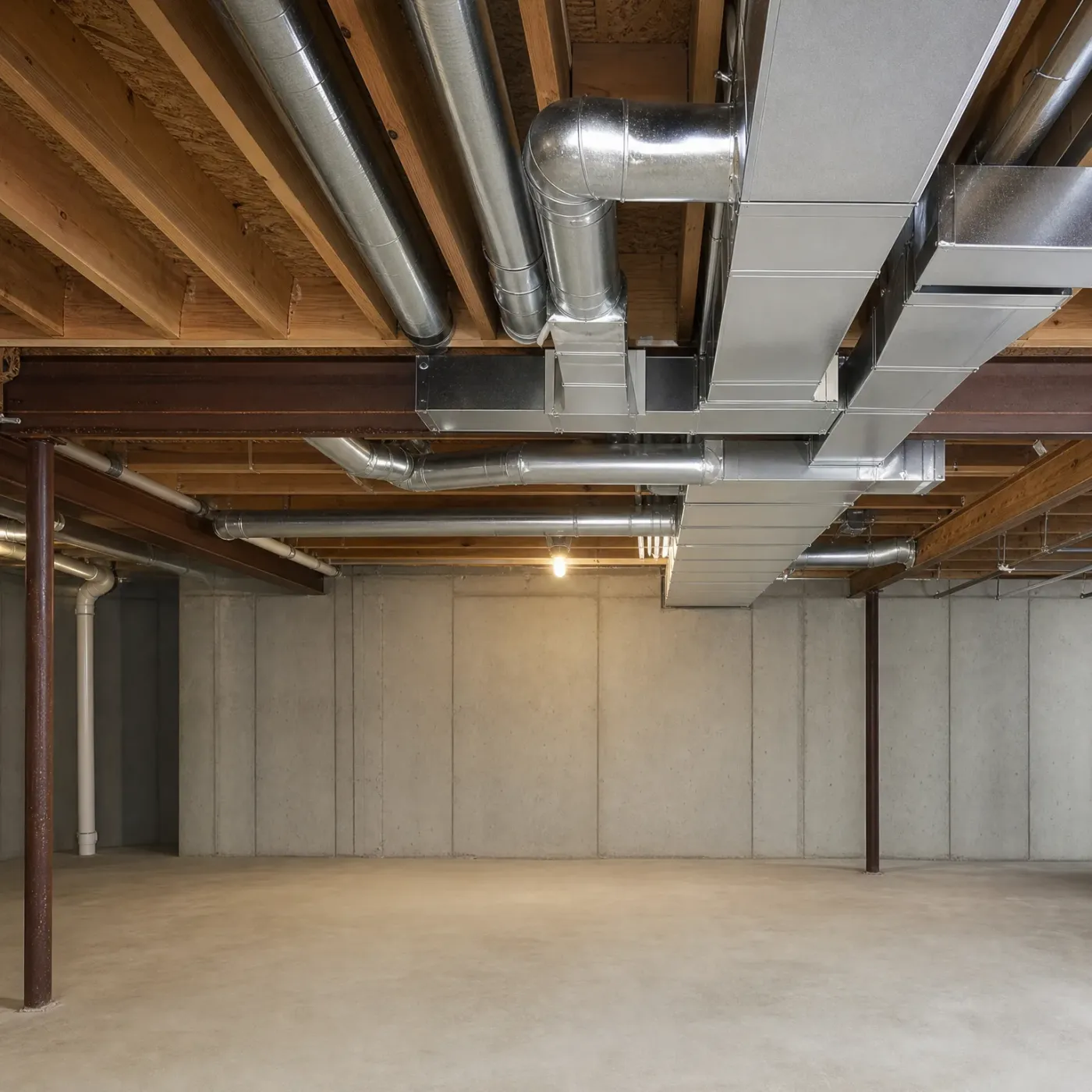
An empty unfinished basement with concrete floor and walls, exposed wood joists, steel beams and support posts, galvanized ductwork and pipes, and a single bare bulb light.

Dry ductwork

This is what the system looks like when it's working right. The metal trunk lines and flex runs stay dry, the joists above them are clean, and air moves through without picking up anything it shouldn't. No film on the metal, no dark rings, no smell riding along with the airflow.

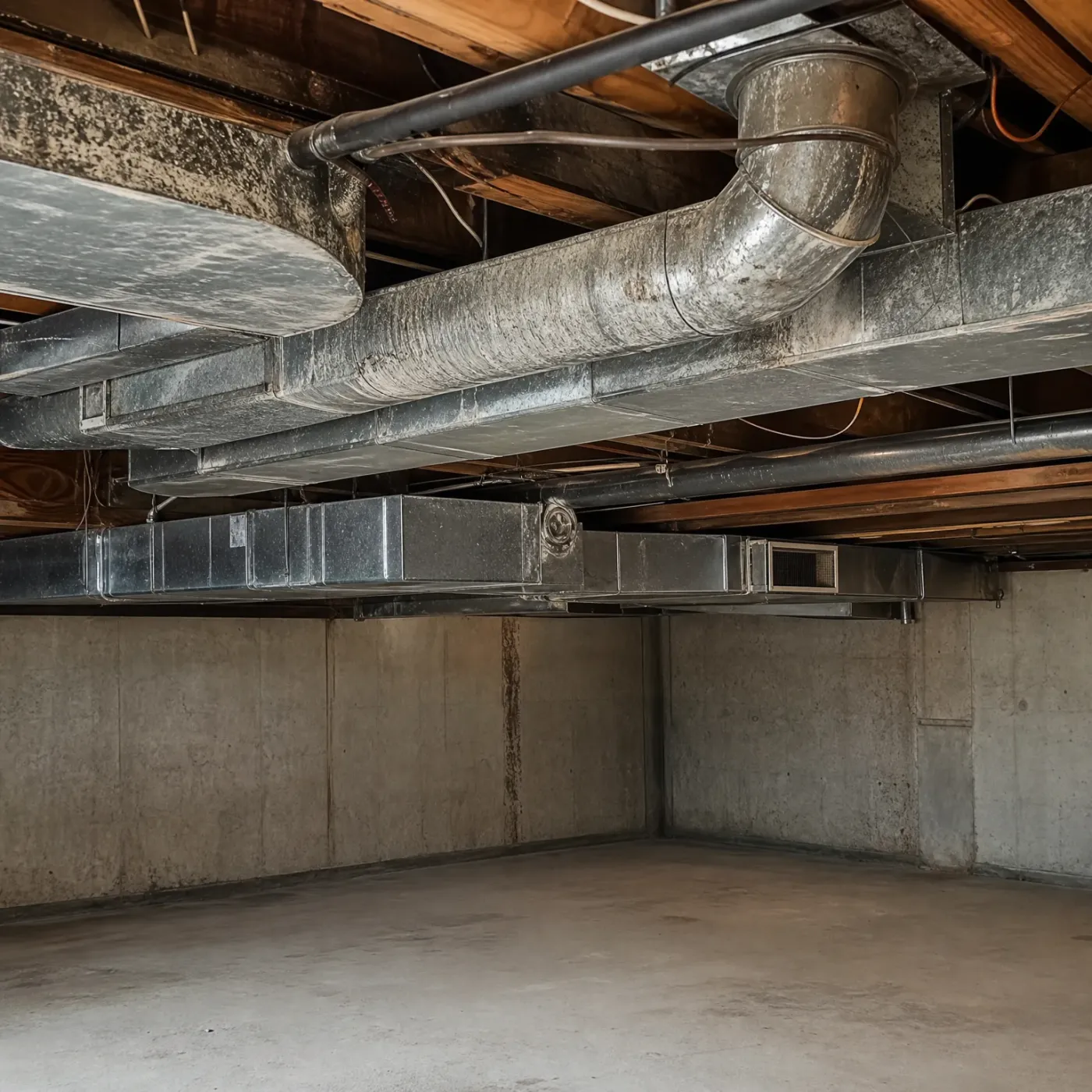
Empty basement with bare concrete walls and floor, with galvanized sheet-metal HVAC ducts, a round duct elbow, and pipes running along the wooden joists of the ceiling.

Ductwork with moisture trapped

Here the joists and duct surfaces carry dark staining where moisture has been sitting instead of draining or drying out. That staining is mold growing on wood and metal it's had time to take hold on. Every time the blower runs, air passes over it and carries the smell into the house.

Power here costs 13.91 cents per kilowatt-hour

At 13.91 cents per kilowatt-hour, running the AC harder to dry out damp ductwork adds up fast over a Jackson summer. A clean, dry duct system moves air without the fan working against trapped moisture, which keeps that cost from creeping higher than it needs to.

EIA-861 2025

Running the AC harder

When the ductwork stays damp, the fan has to push air through a system that's already working against trapped moisture. You turn the thermostat down further to get the same comfort, and it runs longer to get there. Over a Jackson summer that runs May through October, that adds up on the power bill. It also means the coil and the ductwork spend more hours wet, which gives mold more time to grow before the next cleaning. The smell gets worse, the house doesn't cool as evenly, and the cycle feeds itself the longer it goes on.

Getting the duct system clean

A contractor can get into the ductwork and the coil, clear out what's growing there, and get the system moving air again without it fighting trapped moisture. The smell goes away because the source of it is gone, not covered up. Instead of spending a weekend calling around, explaining the gray film on the grille to three different companies, and sorting through quotes that are hard to compare, you get matched with a contractor who handles this and they reach out to you directly. One call, one system that's actually dry again.

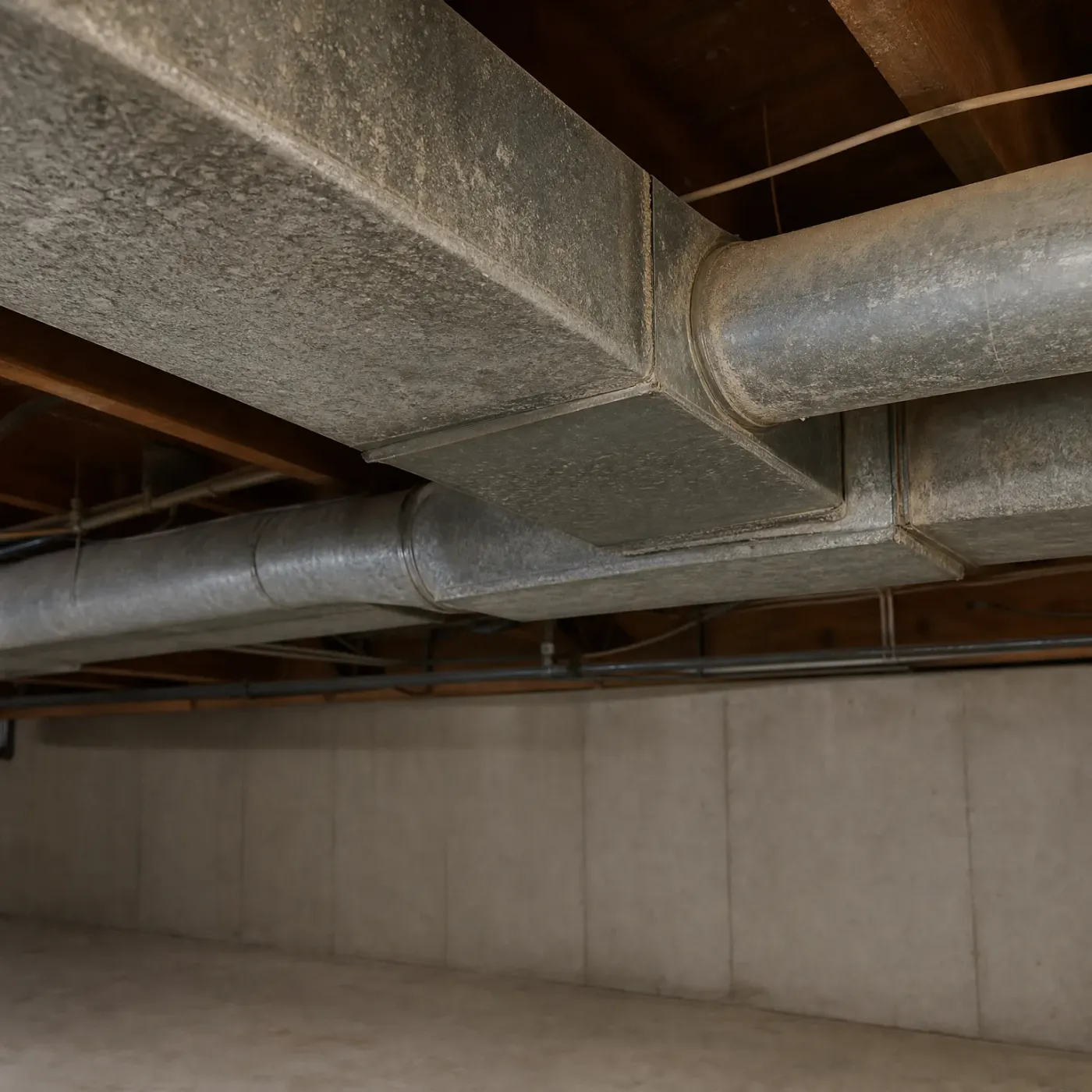
Galvanized rectangular and round sheet-metal ductwork running beneath a wood-joist ceiling in a basement with concrete walls and floor, with pipes and wiring alongside.
Before you get your ductwork cleaning
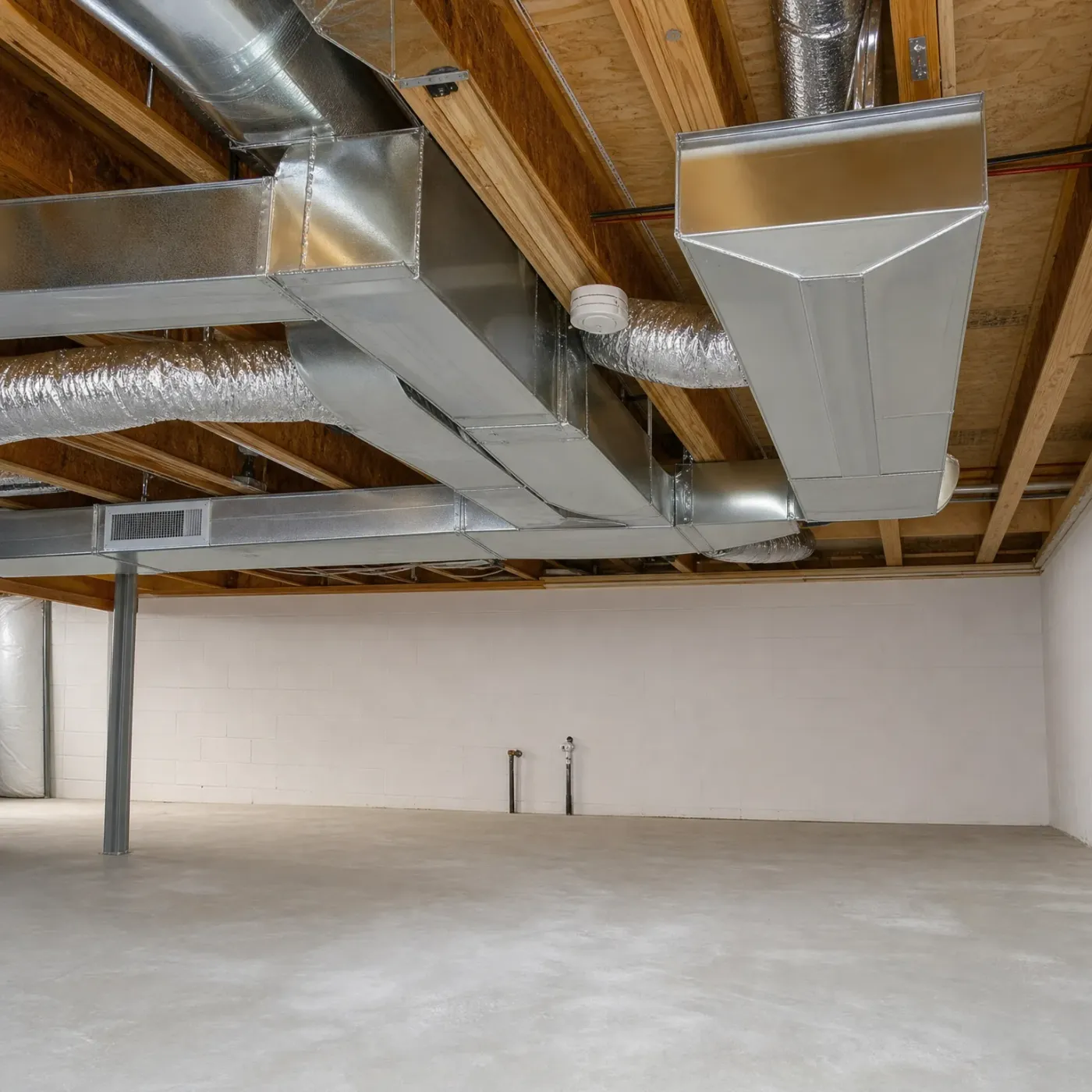
Empty basement with bare concrete floor, painted block walls, and an exposed wood-joist ceiling with sheet-metal and insulated flexible ductwork and a steel support column.
After you get your ductwork cleaning

Find a duct system cleaning pro in Hinds County

Skip searching for someone who cleans ducts in Hinds County.

No charge to send it. You decide if you hire them.

  1. A tech opens the trunk line and checks for standing moisture and buildup.

  2. Vents and registers come off and get cleaned apart from the ducts.

  3. A vacuum system pulls debris and mold out through each branch line.

  4. Agitation tools knock loose buildup stuck to the duct walls.

Can I just clean the coil myself instead of the ducts?

You can reach the coil with a soft brush and a spray-on cleaner from the hardware store, and it seems like the obvious place to start since that's where the moisture problem begins. It's a fair question before calling anyone: if the coil is the source, why pay to clean the whole duct system too?

Cleaning the coil doesn't remove what's already grown in the ducts

Wiping down the coil handles the surface you can see and reach, but mold spores that already traveled into the trunk line and branch ducts stay right where they landed. Once that film is established on sheet metal or inside flex duct, a coil cleaning does nothing to it, and the system keeps blowing air across it every time the fan runs. A tech cleaning the ducts uses a vacuum system pulled through each branch line plus agitation tools to knock loose what's stuck to the walls, which is work a spray bottle and a brush can't reach past the first few feet. If the smell is already showing up at the vents, it's past the coil.

Empty unfinished basement with concrete walls and floor, exposed wood joists, metal HVAC ducts and pipes overhead, and a steel support column near a framed wall.
Ducts like this move air clean, with no film building up on the metal or the joists around them.
Empty basement with bare concrete walls and floor, a steel support column, and galvanized sheet-metal ductwork and pipes running along the exposed wood joist ceiling.
Here the mold has already taken hold on the metal, and every branch line is feeding that smell back into the house.

A tech doesn't just run a hose through the system and call it done. The work moves branch by branch, starting with the trunk line opened up so there's a look at how much moisture and buildup has settled inside before anything gets cleaned. Registers and grilles come off next, pulled from the walls or ceiling and cleaned apart from the ductwork itself, since what's caked on a grille doesn't always match what's inside the line behind it. The vacuum does the real work of pulling debris and mold out, but it relies on negative pressure through each branch, which means the ducts have to be sealed off as the work moves along. Stiff brushes or whips go in ahead of or alongside the vacuum, because buildup that's stuck to the metal won't move on suction alone. And since the coil is usually where the moisture problem started, a tech checks it too. Cleaning the ducts without looking at the coil just means the smell comes back.

How a duct cleaning actually goes

  • A duct cleaning job works branch by branch, not as one pass over the whole system at once.
  • The trunk line gets opened first so a tech can see how much moisture and buildup sits inside before anything else starts.
  • Registers and grilles come off the walls or ceiling and get cleaned separately from the ductwork they attach to.
  • A vacuum system creates negative pressure through the ducts, pulling loosened debris and mold out through each branch line.
  • Stiff brushes or whips knock buildup off the metal that the vacuum alone would leave stuck in place.
  • The coil gets checked too, since moisture there is usually what started the mold growing in the ducts in the first place.
A woman wrapped in a chunky knit blanket sits in an armchair with an open book on her lap, beside a lit table lamp and a window with frost and snow outside.
A woman in a cream knit sweater sits in an armchair indoors, eyes closed and smiling, beside a window showing yellow and orange autumn foliage, with a mug on a wooden side table and shelves holding vases behind her.

Searching and calling around

Finding a contractor, explaining the smell over the phone, then doing it again for the next quote, while the vents keep feeding that smell back into the house.

Get a duct system pro

Matched with a contractor

You answer a few questions once, and a contractor who handles duct cleaning in the Jackson area reaches out to you directly.

Get a duct system pro
A man with a duffel bag walks up a concrete path toward a white board-and-batten house where a woman stands in the open wooden front door, flanked by potted plants and black lanterns.

A musty smell from the vents means moisture in the ducts, and it has a cause

The smell started because moisture is sitting somewhere in the system, usually on the coil or along the ductwork nearby, and mold has taken hold there. That's the whole answer. Jackson summers keep that moisture coming back, which is why the smell doesn't stay gone on its own. Cleaning the ducts and the coil is what gets rid of what's already growing there.

You don't need to figure out which branch line or how bad the buildup is before you get help. A contractor who does this work can open the trunk line, check the coil, and tell you exactly what's in there. Answer a few questions once and you'll be matched with a contractor who takes it from there, instead of you calling around and describing the smell over the phone to three different companies and sorting through what each one quotes you.

A living room with a cream sofa and knit throw beside a window, with a wooden coffee table in the foreground holding a round woven tray, a small bowl, and a speckled vase of green leafy branches.
Dim interior with a dark gray wall, exposed wood joist ceiling, sheet-metal ductwork, conduit, pipes and a sprinkler head.

Get your ductwork to the right pro

Skip calling around for someone who cleans ducts.

Duct and vent cleaningDucts or ventsHinds County, MS
Step 1 of 2

What ZIP code is the job in?