





Mississippi HVAC Guide

Mold in air ducts in Pascagoula, MS

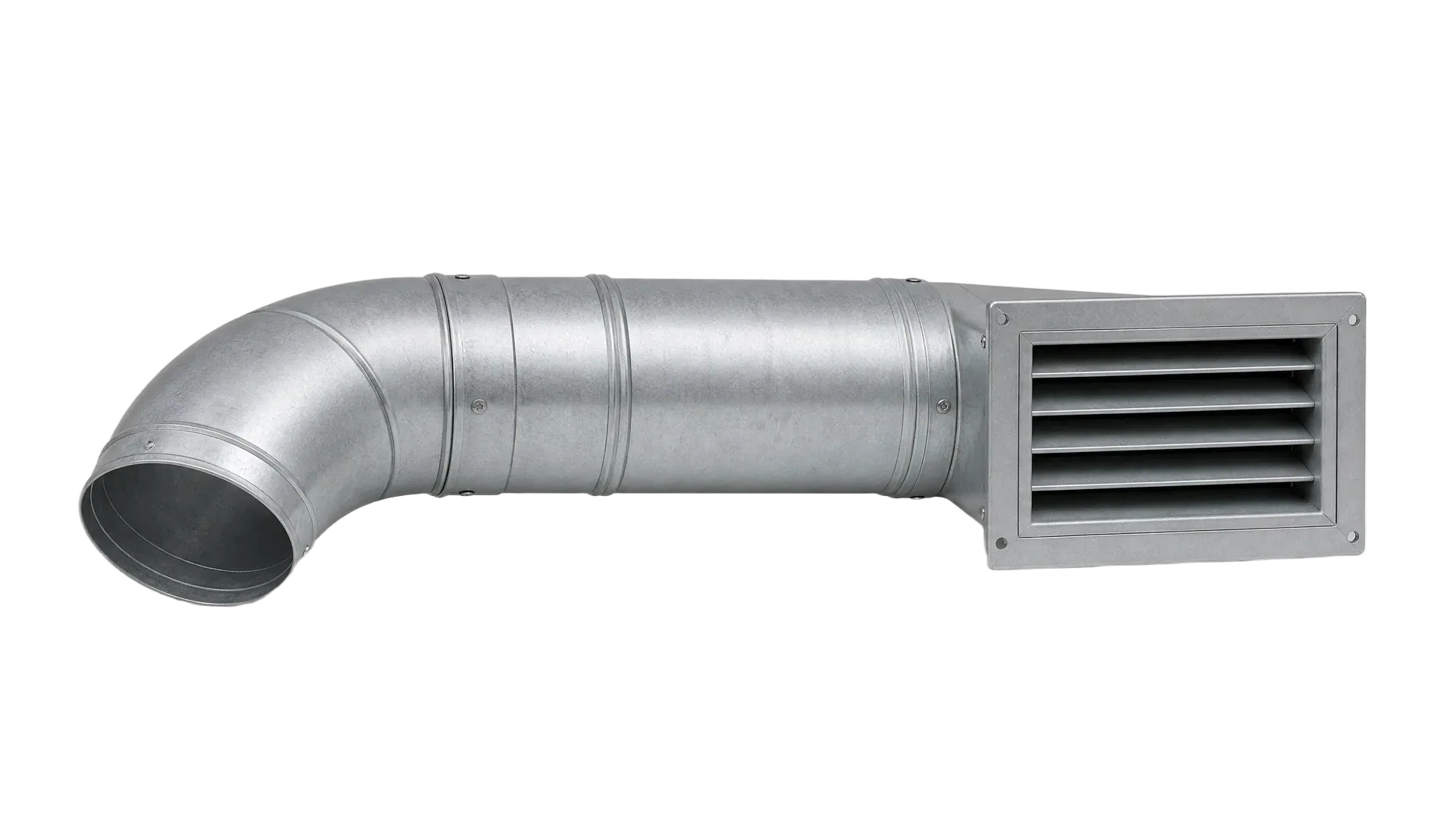
A galvanized metal round duct with a 90-degree elbow connected to a rectangular louvered vent grille, shown against a plain gray background.
I'm done searching

Mold in your air ducts usually means moisture got in somewhere, and in Pascagoula that's not hard to happen given how muggy and long summers run here. Humid air moving through ductwork can leave moisture behind, especially near a cooling coil or anywhere a duct sweats, and mold only needs something damp to sit on. A musty smell when the air kicks on, dust that looks darker than usual, or a spot near a vent that stays damp are the usual signs. It doesn't always mean the whole system is affected. Sometimes it's one section, one joint, one spot where condensation collects. But mold in the ducts means whatever air moves through that system picks up spores and spreads them through the house, so it's worth finding where it started rather than just wiping down what you can see and hoping that's all of it.

Why does mold keep coming back in your ducts?

  • Half the homes here were built by 1984

    Half the homes in Jackson County were built in 1984 or earlier. Older duct runs and seams are more likely to sweat or leak where moisture can settle.

  • Heat runs November through March

    Heat runs November through March here, about five months a year. For most of the year the ducts sit idle or carry cool, damp air instead.

  • Cooling runs April through October

    Cooling runs April through October, about seven months a year. That's seven months of humid air passing over a cold coil and through the ductwork.

ACS 2020-2024 · NOAA nClimDiv 1991-2020

Galvanized sheet-metal ductwork and pipes running along an unfinished basement ceiling beside a plain beige wall, with a gray equipment cabinet below.

Mold you can see

If you can get to the duct and see dark spots or a fuzzy coating on the metal, that's something a cleaning can reach directly. A contractor can run a camera through to check how far it spreads and clean the duct walls themselves. This is the more straightforward case, since the problem is sitting right there in the metal and doesn't need any guesswork about where moisture is getting in.

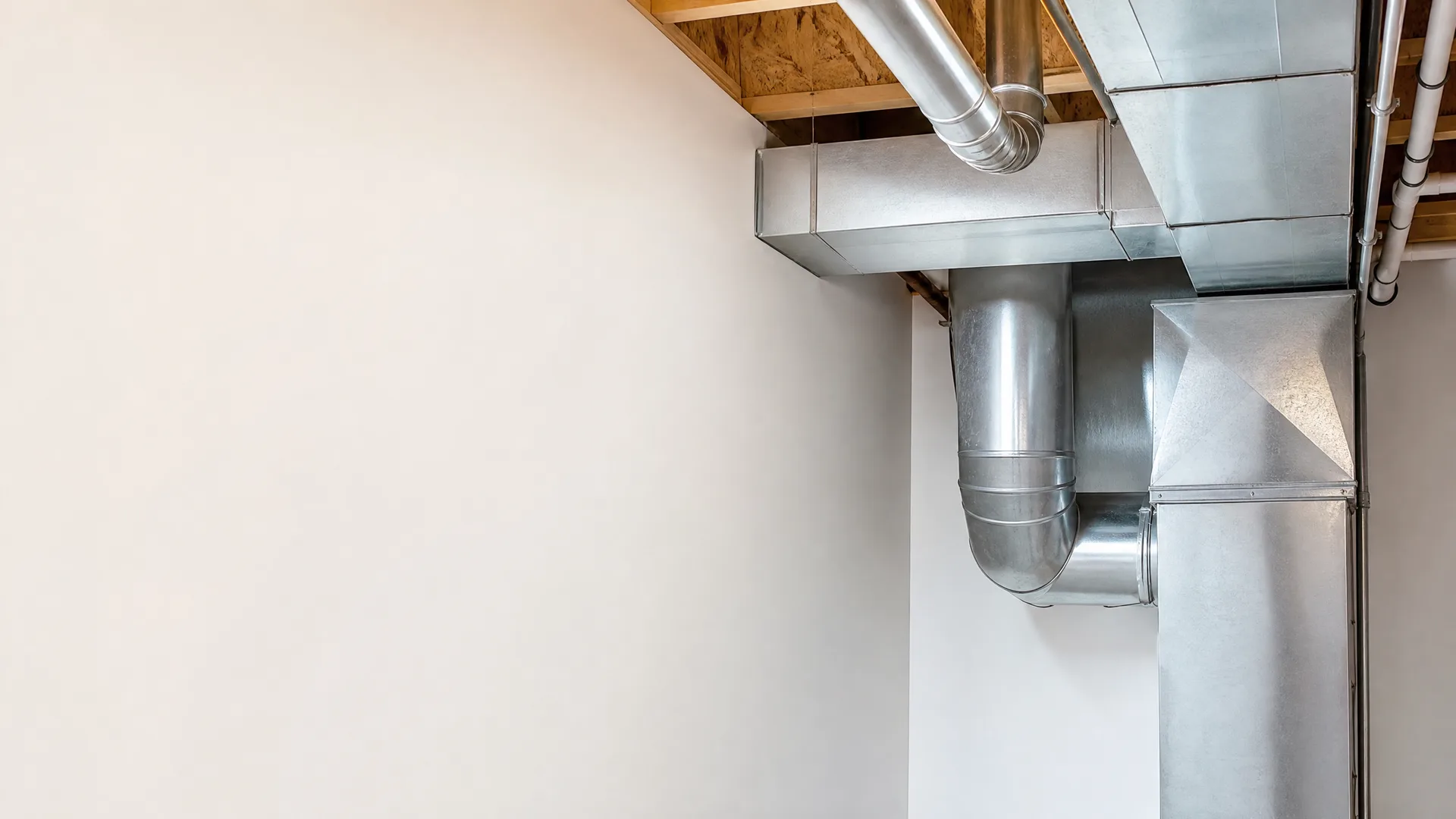
Galvanized sheet metal rectangular and round HVAC ducts running along a ceiling and down a white interior wall, with exposed wood joists and subfloor above.

Mold you only smell

A musty smell with no visible spots usually means the mold is growing somewhere you can't see, maybe inside a long duct run or near the coil itself. This takes more work to track down. A local contractor who services this equipment every summer knows the spots in a duct system here that tend to collect moisture first, and can check those before cleaning the rest.

Cleaning It Yourself or Calling a Contractor

DIY Cleaning

  • You can wipe down visible mold on accessible duct sections and vent covers with the right cleaner, and that handles what you can reach and see.
  • A box fan or shop vacuum can pull some loose debris out of a duct run, but it won't reach the bends and branches further back.
  • You won't know if the mold has spread past what you can see, since most of the duct system runs behind walls, floors or in the attic.
  • Cleaning the surface doesn't address what let moisture in to begin with, so mold already growing further down the line keeps feeding on it.
  • Without a camera, there's no way to confirm the duct is actually clean once you're done, just that the part you touched looks better.

Professional Cleaning

  • A contractor local to Jackson County who services duct systems through summers this muggy has seen where mold tends to start and where it tends to hide.
  • A camera run through the ductwork shows how far the mold has spread, past the sections you can reach on your own.
  • Cleaning equipment built for duct interiors gets into the branches and bends a vacuum or a rag can't reach.
  • One contractor takes the job rather than several, so you're working with a single licensed crew instead of fielding calls from competing companies.
  • A full cleaning addresses what a surface wipe-down leaves behind, mold growing in duct sections you never see.
  1. Moisture settles in the ductwork, usually near the cooling coil.

  2. Mold spores already in the air find that damp surface and take hold.

  3. Growth spreads along duct seams and walls where airflow is weakest.

  4. Running the system pulls spores past the growth and into your rooms.

What's that smell when the air kicks on

A musty smell when the air handler starts, stronger in a closed-up room than out in the hall, is often the first thing people notice. Some see it before they smell it: a dusting of dark spots around a vent cover or on the grille itself. A room that stays muggy even with the AC running, or dust that seems to settle again right after you've cleaned, can point the same way. None of this is urgent in the way a gas leak is urgent, but mold in the ducts keeps circulating while the system runs, and in a house with anyone who has allergies or asthma, that's worth taking seriously rather than living with.

A smiling man in a blue denim shirt over a white tee sits at a light stone kitchen counter with a grey mug and a bowl of oranges and bananas, with pendant lights and shelving behind him.
A smiling bearded man in a grey long-sleeved shirt sits at a kitchen counter with a dark mug, with a dining table, pendant light and glass doors onto greenery behind him.
A bearded man in a dark green knit sweater smiles and looks off to the side while standing at a kitchen counter with a white mug of coffee, with open shelving, a potted tree, and a dining table near large windows behind him.
A man with dark curly hair in a dark green sweater stands smiling and looking to the side in a kitchen with white cabinets, a potted plant, a stone countertop with a ceramic mug, and a dining area with framed art in the background.

Let someone else find the pro

A duct system you can't fully see is a hard thing to trust once mold's turned up in it. You know what you can reach with a vacuum and a cleaner, but the runs behind the walls and above the ceiling are a different problem, and in a house dealing with Pascagoula's humidity for months at a stretch, that's where it tends to hold on. Finding a contractor who works on ducts in Jackson County every summer, who knows where moisture collects in a system like yours and what a cleaning actually needs to reach, takes time you'd rather not spend while that smell keeps coming back through the vents. Sending the request means one local contractor looks at your situation instead of you working through a list of names and hoping one knows the area. That's the part you can hand off right now, while the mold is still just a smell and a few dark spots, not something spread through every run in the house.

Why the coil matters most

The cooling coil runs cold and wet most of the day from April through October, and that makes it the one spot in the duct system that's almost always damp. Air passes over it before it ever reaches the ductwork, so anything growing there gets carried downstream every time the system runs. A contractor cleaning the ducts usually checks the coil first, because a duct run can be cleaned spotless and still pick mold back up if the coil behind it wasn't.


What the ducts are made of

Sheet metal duct doesn't feed mold on its own, but seams, joints and any insulation lining inside give it something to grip once moisture shows up. Flex duct with an inner liner holds onto dust and moisture more than bare metal does, and that dust is food for mold spores already in the air. A contractor who cleans ducts for a living in Jackson County knows which duct material in your attic or crawl space tends to hold onto growth longest, and cleans it accordingly.

Power here costs 14.15 cents per kilowatt-hour

Electricity here runs 14.15 cents per kilowatt-hour, close to typical. Running the blower longer to fight mold, or running a whole-home air cleaner alongside it, adds up on that rate. Getting growth out of the ducts now means the system isn't working harder than it has to.

EIA-861 2025

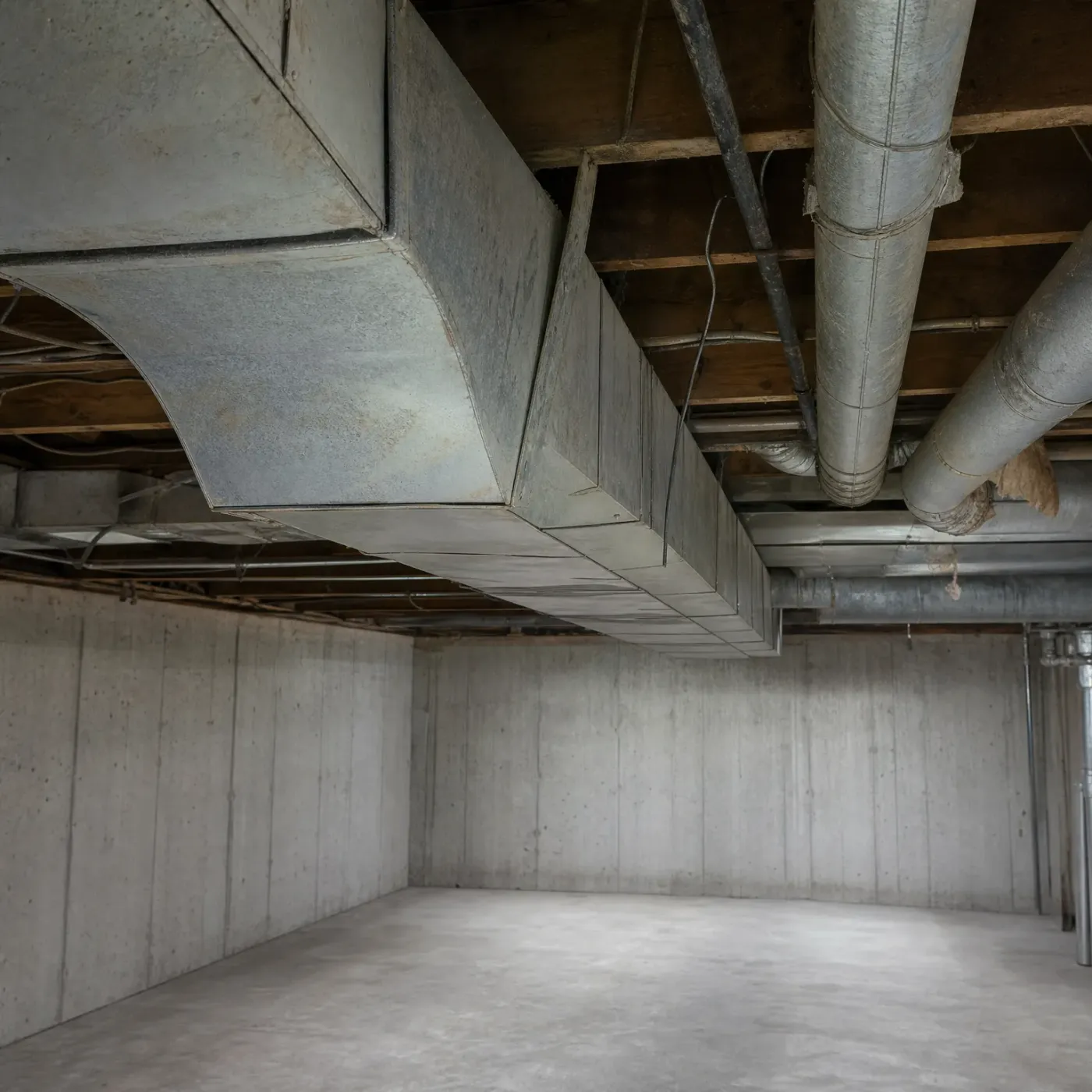
Unfinished basement with concrete floor and walls, exposed wood joists, galvanized sheet-metal ductwork, a furnace unit, a steel support column, and a small window.
Clean metal duct walls and tight seams give moisture nowhere to sit, so the furnace and cooling coil keep working the way they're supposed to.
Empty unfinished basement with bare concrete walls and floor, showing exposed wooden joists, galvanized sheet-metal ductwork, pipes, and a white vent grille overhead.
Flex duct and joints left exposed along the joists are where dust and damp gather first, and where mold usually gets its start.
Dim room corner with a framed picture on a textured wall above a counter holding a tall ceramic vase and a shallow wooden bowl, with a sheer curtain beside a window and a ceiling air vent overhead.

Late April, early afternoon, and the house has been shut up since morning. Sun comes through the living room window at an angle that catches the ceiling vent just right, and you see it: a gray film along the grille, thicker in the corners where the louvers meet. The side table underneath has the same film, fine enough that it doesn't look like dust until you run a finger through it. The air handler kicks on and you feel the draft push down before you hear it. You didn't notice the smell until you were standing right under the vent. The dust on the table was there longer than the smell has been.

Can mold actually grow inside metal ductwork, or just on the vents?

You've wiped down the vent covers and the mold keeps showing up, which makes you wonder if it's only on the grilles or if it's actually growing further back, inside the metal duct itself where you can't see it or reach it with a rag.

Yes, mold grows on the metal inside the duct, not just on the vent cover

Metal ductwork is bare sheet metal, and where moisture collects on it, mold can take hold the same as it would on any damp surface. The vent cover is just the part you can see, and it's often the last place mold shows up, not the first. By the time it's visible on the grille, it's usually been growing further up the run for a while already, especially near the cooling coil where the metal stays wet most of the day from April through October. Wiping the cover down handles what's in front of you. It doesn't touch what's growing on the duct walls behind it, which keeps feeding spores back out every time the blower runs.

Empty concrete-walled basement with bare floor, showing large galvanized sheet-metal HVAC ducts, insulated pipes, wiring and wooden floor joists overhead.
Before you get your ductwork cleaning
Empty unfinished basement with bare concrete floor and wall, wood-framed stud walls, exposed joists, galvanized HVAC ducts and pipes overhead, a steel beam and red support column, and a single bare bulb light.
After you get your ductwork cleaning

Mold in Your Ducts, Plain

  • Mold in a duct system comes from moisture, and the cooling coil is where that moisture usually starts.
  • Dark spots on a vent cover or a musty smell when the air kicks on are both signs worth checking further back in the duct.
  • Wiping down what you can reach handles the surface, but growth inside the duct walls and along hidden seams needs a camera and real cleaning.
  • Jackson County's long muggy summers and older duct runs give mold more chances to take hold here than in a drier climate.
  • Clean duct walls and tight seams mean the furnace and coil aren't working against buildup that shouldn't be there.
  • Getting ahead of it now keeps a small patch of mold from spreading through the whole system.

Mold in a duct system almost always traces back to moisture, and the cooling coil is the part that stays wet longest, April through October here. Once spores settle on that damp surface they spread along seams and duct walls, especially in older runs, and Jackson County has plenty of those. A musty smell when the air kicks on, or dark spots around a vent cover, usually means there's more growth further back than what you can see from the room. Wiping down a vent cover or running a shop vacuum over what you can reach takes care of the surface. It doesn't touch what's grown inside the duct walls or along a seam above the ceiling, and that's the part that keeps coming back if it's left alone. A contractor working in Pascagoula can run a camera through the system to see how far it's spread, then clean the duct walls and seams directly instead of guessing from the vent. Clean ducts mean the furnace and coil aren't fighting buildup that was never supposed to be there, which matters in a county where summers run long and humid and give mold every chance to take hold. Catching it now, while it's still a patch near the coil or along one run, is a smaller job than waiting for it to spread through the whole system. Either way, the ducts are only going to tell you so much from the vent covers alone.

A bearded man in a dark blue T-shirt sits on a gray couch, smiling and looking down to his left, with a bookshelf and a bright window behind him.
A bearded man in a plaid flannel shirt stands indoors beside a wood-framed, frost-covered window, looking outside, with a steaming brown mug on the sill and a wooden cabinet behind him.

Ductwork Cleaning

One request and it's handed off

A licensed pro who works in Jackson County gets your request.

A black-framed smartphone standing upright against a plain light gray background, its screen filled with solid green.
Duct and vent cleaningDucts or ventsJackson County, MS
Step 1 of 2

What ZIP code is the job in?