Why your house is so dusty in Jackson, MS

Find a duct system pro

Dust settling back on every surface a few days after you clean, in a Jackson house with central air, usually comes down to the ductwork or the filter, not your housekeeping. Humidity here stays high most of the year, and a system that's not pulling air through clean ducts or a tight filter spreads more of it through the house instead of catching it. Figuring out which part of your system is behind it from the outside is hard, and most homeowners don't have a reason to know the difference between a duct problem and a filter problem until someone's looked at both. That's the part worth handing off. Answer a few questions about your house and your system, and you'll be matched with a contractor near Jackson who takes on duct cleaning and can work out what's actually sending dust back into your rooms. Once that's sent, it's off your plate.

A house that gets dusty again just days after cleaning is usually telling you something about the air moving through it, not about how often you clean. Central air systems pull household air through a filter and a return duct, then push it back out through the supply ducts into every room. If that filter is too thin to catch fine dust, or if the ducts have gaps and leaks, dust gets carried right back into the air instead of getting trapped. Jackson's long, muggy summers make this worse, because a system fighting high humidity runs longer and moves more air through the house, which means more dust gets circulated if the filter or ducts aren't doing their job. Leaky ducts can also pull dust from the attic or crawlspace into the air supply itself. The fix usually starts with knowing what's actually happening inside your ductwork, not with more cleaning.

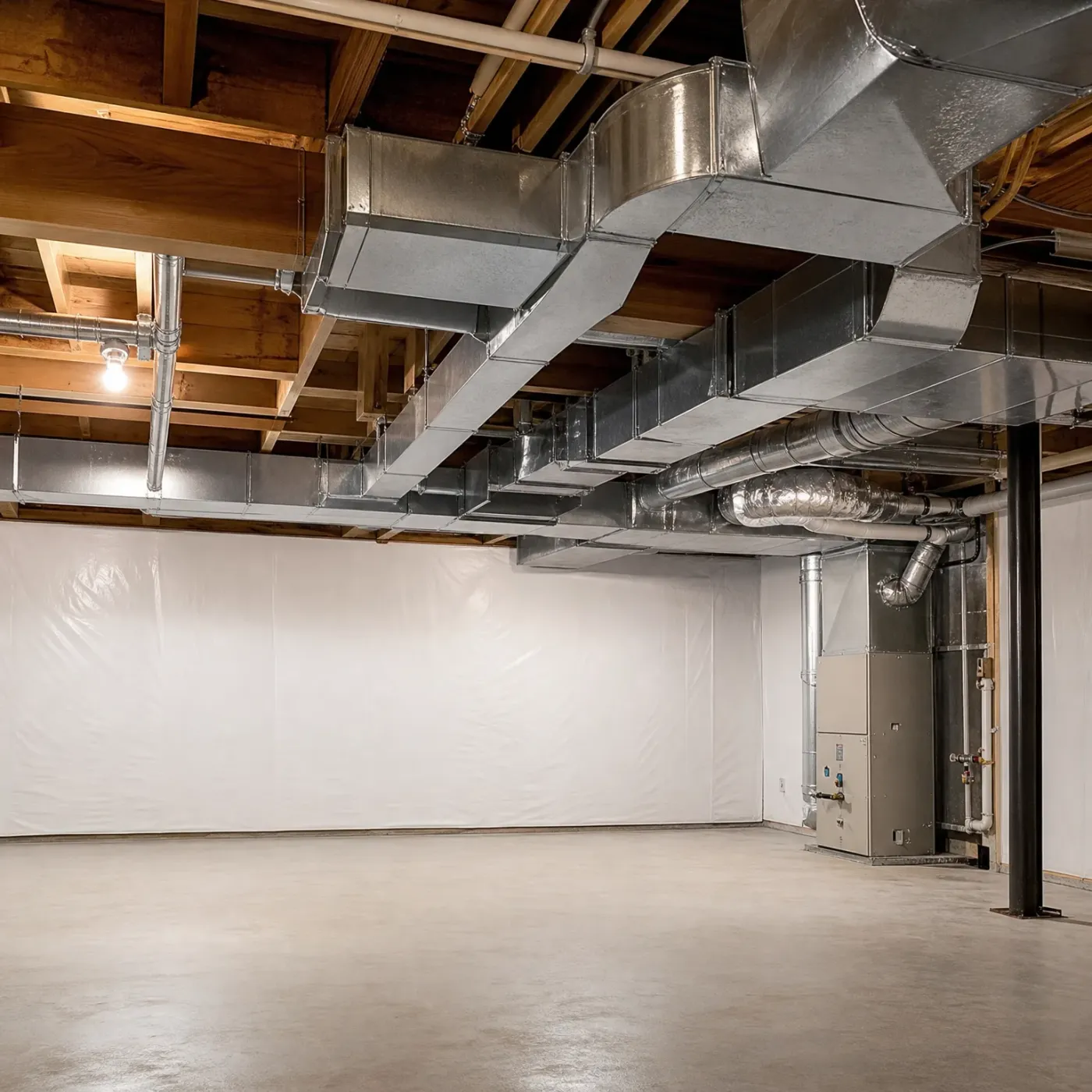
Empty basement with bare concrete floor, white plastic sheeting over one wall, exposed wood joists, galvanized sheet-metal ductwork and pipes overhead, and a furnace unit with a steel support column at right.

Ducts sealed and moving air

This is what you want under the house. The metal trunk lines run tight to the joists, every joint holding, and the furnace draws air through the system the way it was built to. Air moves one way, in through the return and out through the registers, carrying dust with it instead of leaving it behind.

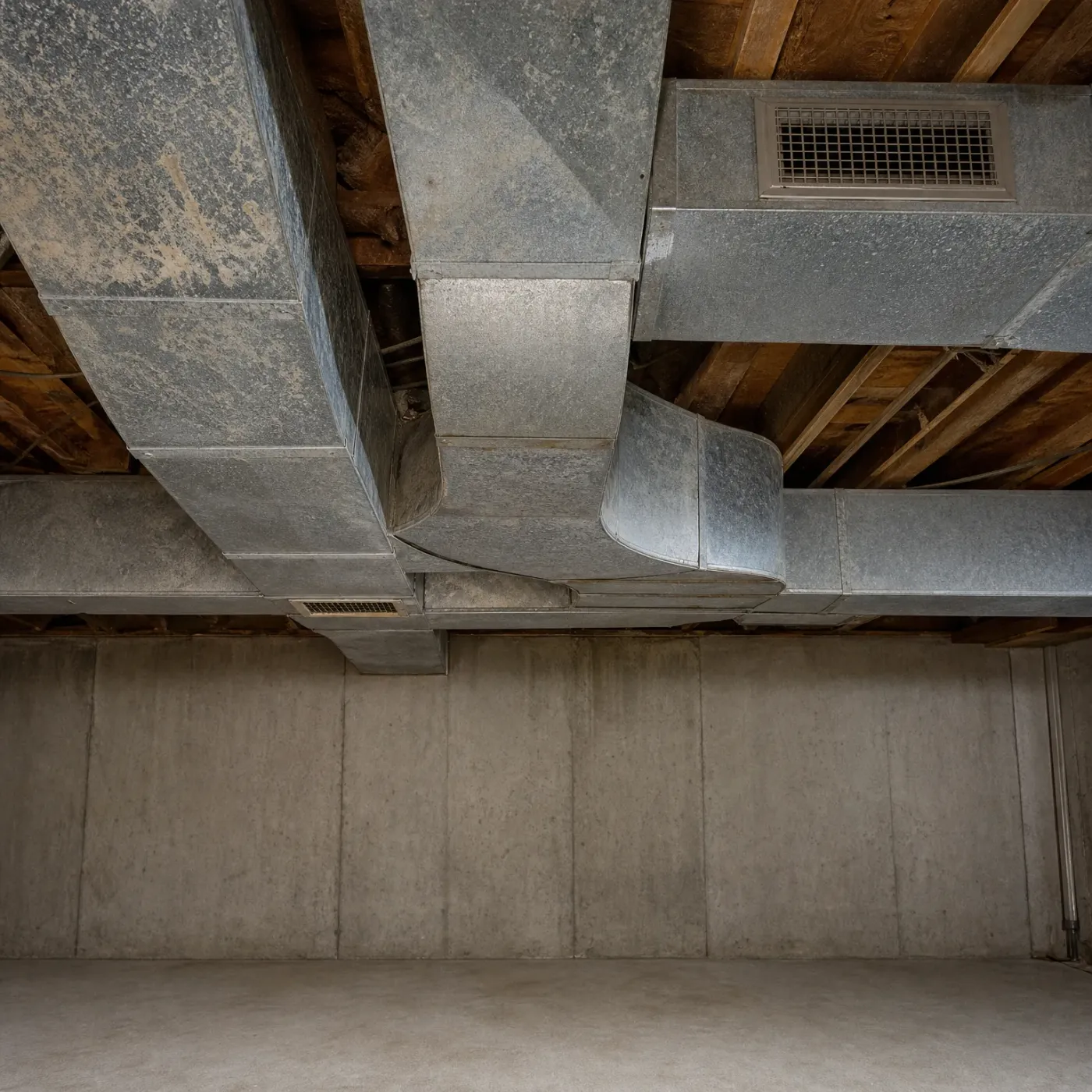
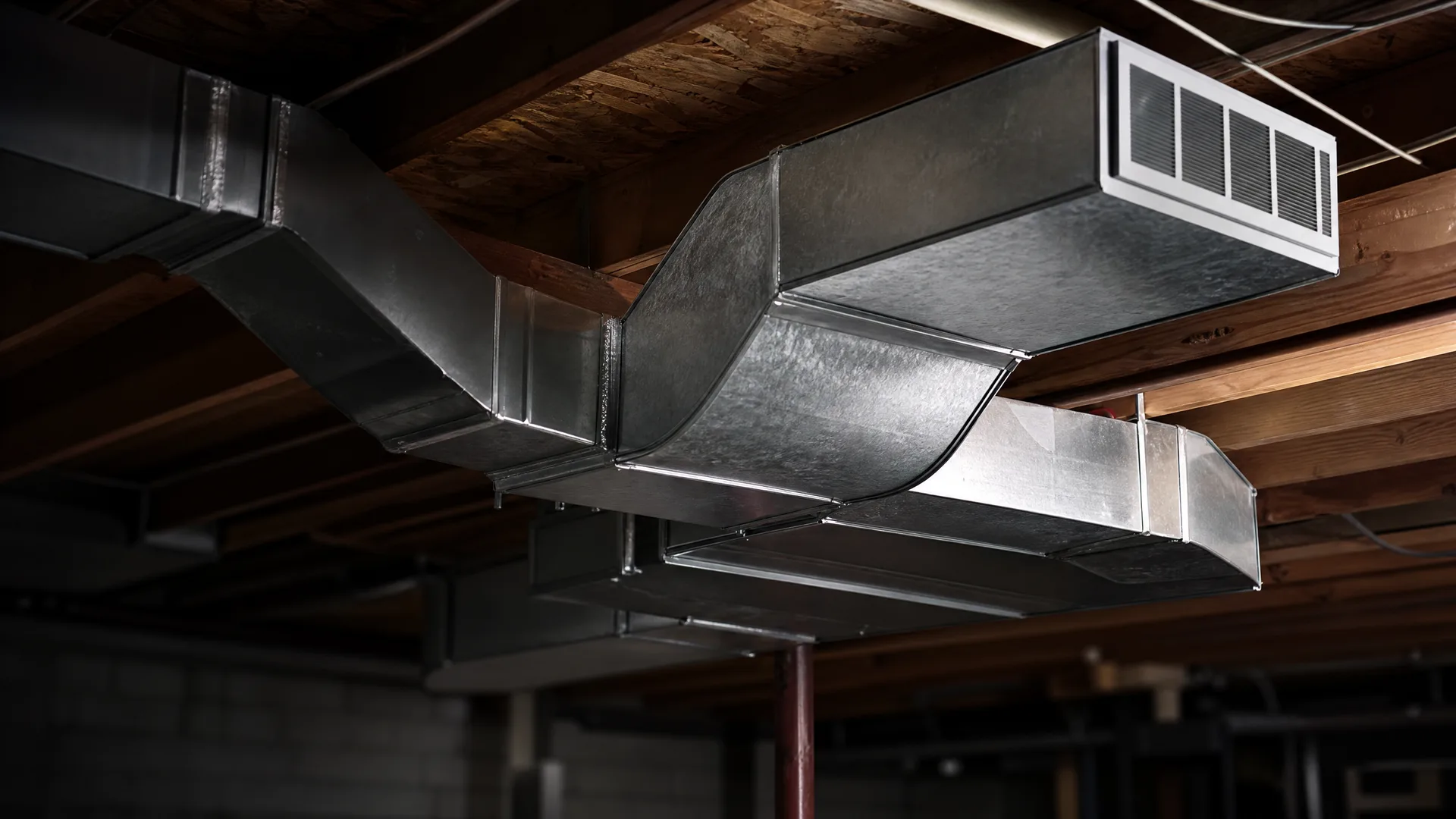
Galvanized sheet metal HVAC ducts with vent grilles run along a wooden floor joist ceiling above bare concrete walls and floor in an unfinished basement.

Ducts leaking along the way

Here the same kind of ductwork is pulling air from the wrong place. A gap at a joint or a loose connection lets the system draw in air from the crawlspace or basement instead of through the filter. That air carries dust straight into your supply registers and out into the rooms you just cleaned.

Why does a 1970s Jackson house hold onto more dust?

  • Half the homes here were built by 1974

    Half the homes in Hinds County were built in 1974 or earlier, and ductwork that old has had decades to loosen at the joints and pull in attic or crawlspace dust.

  • Heat runs November through March

    Heat runs November through March here, about five months of the system pushing air through those same ducts and stirring up whatever has settled in them.

  • Cooling runs May through October

    Cooling runs May through October, six months where humidity makes dust stick to surfaces faster, so whatever the ducts carry shows up sooner.

ACS 2020-2024 · NOAA nClimDiv 1991-2020

A return duct that's pulling air from a dusty crawlspace instead of your living room is moving dirt through the system every time the furnace or AC runs, not just on humid days.

That's why a house can look clean and still turn gray again within a week. The dust isn't coming from the rooms you wiped down, it's coming from inside the ducts themselves.

An older man with gray hair and a beard, wearing a dark coat flecked with snow, stands smiling in a dimly lit home hallway with lamps, a framed picture, and a wooden door.
A gray-haired, bearded man in a dark coat dusted with snow stands just inside an open door of a warmly lit home, looking off to the side.
An older bearded man in a dark snow-dusted coat and gray scarf stands just inside a dimly lit home entry, with a framed picture, lit table lamp, and an adjoining room with a fireplace behind him, and snow visible through the open door.
A gray-haired bearded man in a dark coat and scarf dusted with snow stands smiling in a dimly lit entryway with a white front door, a side table with a lit lamp, an oval mirror, and a patterned rug.

Power here costs 13.91 cents per kilowatt-hour

At 13.91 cents per kilowatt-hour, a blower that's working harder than it should, because of a clogged filter or a duct leaking air into the attic, shows up on your bill before you ever notice the dust. Sealing that system up pays you twice.

EIA-861 2025

A dimly lit living room corner with a gray wall, framed picture, a table lamp on a wooden side table, a beige sofa with pillows, a ceiling vent, and windows showing flowering trees outside.

It is a Saturday afternoon in April, and the light coming through the living room window is doing you no favors. You notice it on the ceiling vent first, a gray felt of dust along the grille, then on the side table underneath, the one you wiped down last weekend. The ceiling fan is off. The air feels thick the way it does once Jackson's humidity starts building toward summer. You run a finger along the table and it comes back dark. Nothing in the room has changed since you cleaned it. The vent above it has been pushing the same air through the same ducts the whole time, and whatever those ducts are carrying, it is landing here, on this table, under this vent, again.

Get matched with a duct system pro in Hinds County

One request and the duct cleaning stops waiting on you.

You're not committing to anything by asking.

A filter that's too tight for the job

A high-MERV filter promises to catch more dust, and it will, but only if the blower can still pull air through it. Furnaces and air handlers here are sized for a certain amount of resistance, and a dense filter can choke that airflow down. When that happens, the system struggles to move air through the return at all, and some of it finds another way in, through a gap in the duct or a loose panel at the air handler. You end up with less filtering, not more, because the air that matters most is skipping the filter entirely. The fix usually isn't a better filter. It's the right filter for that specific blower, changed on a schedule that keeps it from loading up and choking airflow again.

A filter that's doing its job

A filter sized right for the blower lets air move the way the system was built to move it, through the return, across the coil, and back out the supply ducts without a fight. Dust gets caught where it's supposed to get caught, and the house stays cleaner between cleanings because the air circulating through it has actually been filtered. You'll notice less buildup on the vents and less gray film on furniture near the registers. A system working this way also runs its normal cycle length instead of straining, which matters for the equipment as much as for the dust. This is the baseline a dusty house in Jackson is usually missing, not a deeper cleaning habit.

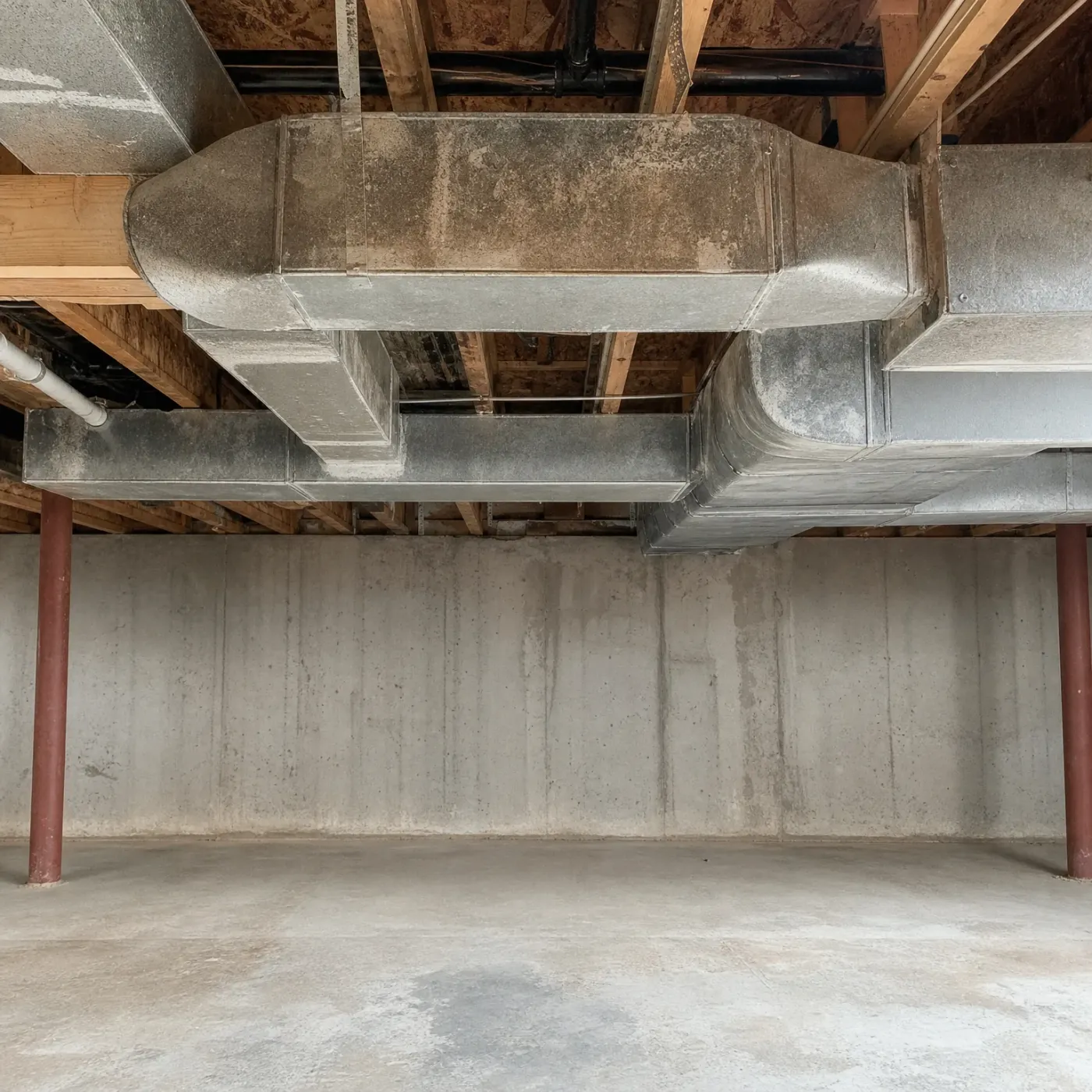
Unfinished basement with bare concrete walls and floor, galvanized sheet-metal HVAC ducts running beneath wooden floor joists, and two red steel support columns.
Before you get your ductwork cleaning
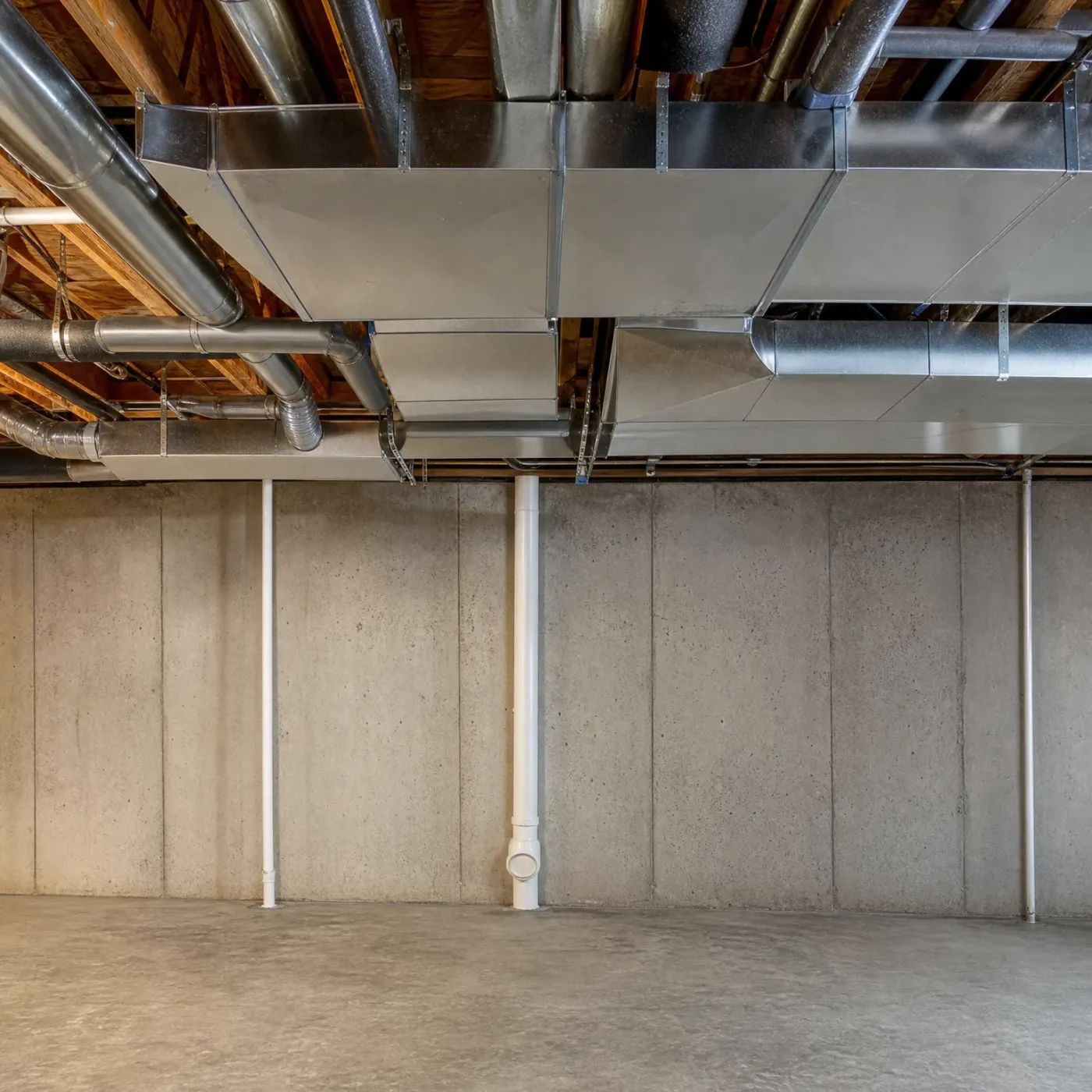
Unfinished basement with poured concrete walls, a bare concrete floor, white PVC pipes running down the wall, and exposed sheet-metal HVAC ductwork beneath wood floor joists.
After you get your ductwork cleaning
Empty basement room with bare concrete walls and floor, and an exposed wood-joist ceiling carrying sheet-metal ductwork, insulated pipes, and recessed lights.

Ductwork that's sealed and intact

This is a system doing its job. The trunk lines run tight against the joists, the joints are sealed, and the furnace pulls return air from inside the house. Dust that lands stays landed, because nothing is dragging crawlspace or attic dirt back through the vents.

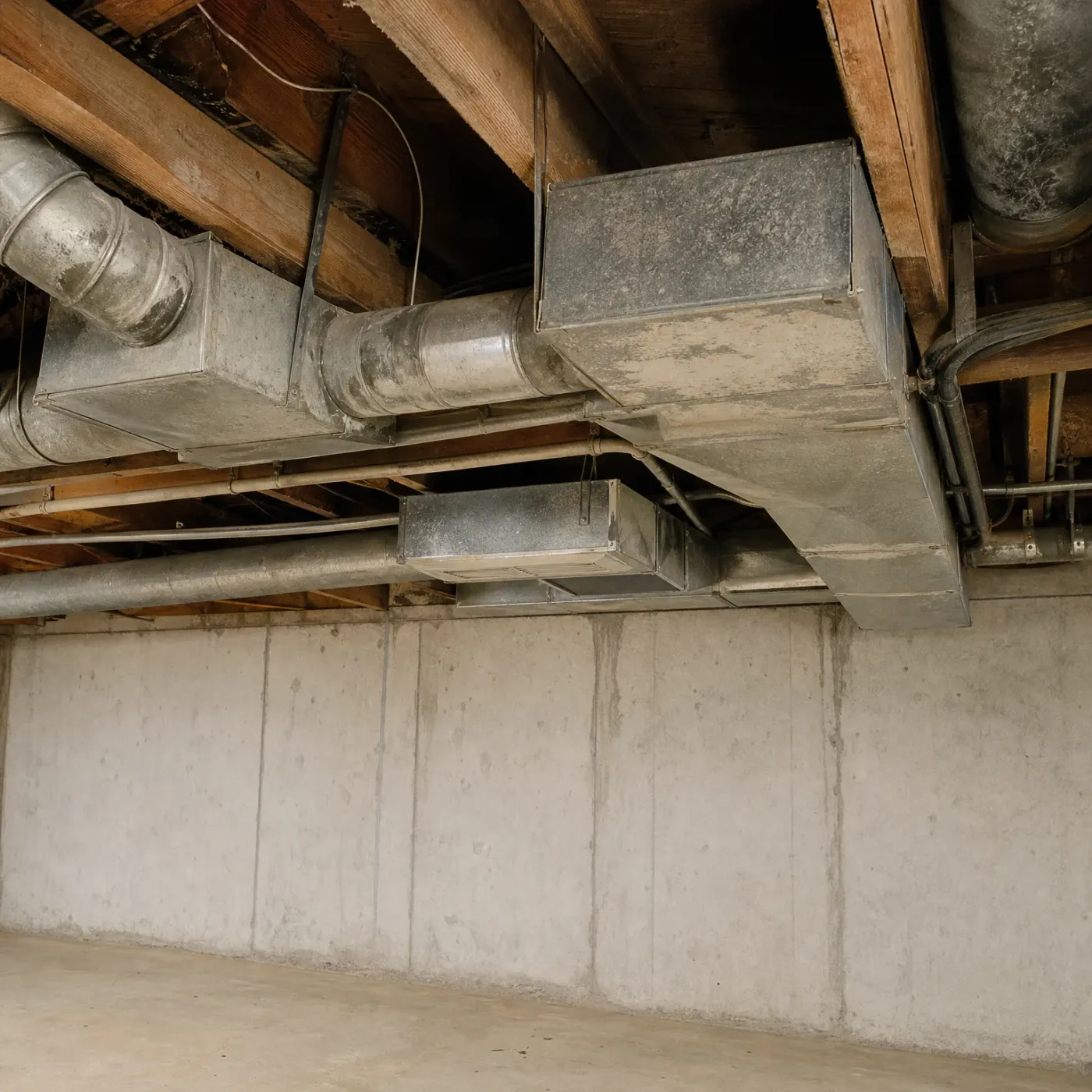
Basement ceiling with galvanized sheet metal ductwork, round pipes and rectangular plenums running between wooden joists above a bare concrete foundation wall and floor.

Ductwork with gaps and loose joints

Here the transitions and seams have opened up over the years, and every cycle pulls in air from spaces no one wants circulating through a living room, the crawlspace, the attic, the gap around the foundation wall. That's the air settling back on your furniture a few days after you clean.

Can duct cleaning actually fix how dusty my house is?

Can duct cleaning actually fix how dusty my house is?

Yes, if the dust is coming from inside the ducts themselves

Cleaning removes what's already built up inside the trunk lines and the boots at each vent, the dust and debris that gets stirred loose and blown into the house every time the blower kicks on. If that's where your dust is coming from, cleaning solves it. But it won't fix a return pulling air from a dusty crawlspace, or a duct leaking at the joints and dragging in attic insulation. A contractor who cleans the system can also look at whether it's sealed right while they're in there, so the dust doesn't just build back up the same way it did before.

  1. A technician opens the trunk line at an access point near the furnace.

  2. A vacuum collector attaches to the duct to hold the system under negative pressure.

  3. A brush or air whip knocks loose dust from the duct walls as it moves through each run.

  4. Loosened dust and debris pull back through the ducts into the vacuum.

Clean Ducts or Seal the Leak

Duct cleaning helps

  • It removes dust, insulation fibers and debris that have built up inside the trunk lines and boots over years of the system running.
  • It helps if a return has been pulling air from a dusty attic or crawlspace, since that dust has been coating the inside of the ducts all along.
  • It can bring real, visible relief right after the work, since what was stirred up with every blower cycle is gone from the ducts themselves.
  • It's a one-time service, not a recurring fix, so if the cause is still open gaps or a weak filter, dust will start building back up in the ducts again.
  • It does nothing for a leak in the duct run itself, so air will keep drawing in dust from outside the living space after the cleaning is done.

Sealing and filtering helps

  • It stops the cause instead of clearing out what the cause already left behind, so dust has nowhere to get in going forward.
  • Sealing a leaking joint or boot keeps the return from pulling attic or crawlspace dust into the airstream in the first place.
  • The right filter, matched to what the blower can actually pull air through, keeps catching household dust every time the system runs.
  • It costs nothing to check whether your filter is too dense for your furnace or air handler, since that alone can choke airflow and spread dust further.
  • On its own, it won't clear out years of dust already sitting inside the ductwork, so a system with heavy buildup may still need that removed first.
A woman wrapped in a thick fleece blanket sits on a sofa holding an open book, beside a lit table lamp and a frost-covered dark window.
An older woman with short gray hair in a cream cable-knit turtleneck sweater smiles while looking to the side in a wooden kitchen, with a round loaf of bread on a board in the foreground and a lit candle by a dark window.

Where the dust is coming from

  • Dust that comes back within days almost always traces to the ductwork or the filter, not your cleaning habits.
  • A duct that leaks or pulls air from the attic or crawlspace keeps feeding dust into the house every time the system runs.
  • A filter that's too tight for the blower chokes airflow and leaves dust in the air instead of catching it.
  • Sealed trunk lines and the right filter let the furnace or AC do what it's built to do: move air one way and clean it as it goes.
  • A Jackson house built in 1974 or earlier has had decades for duct joints to loosen, so older homes see this more often.
  • Once you send the form, finding someone to look at the ductwork stops being something you have to chase down yourself.

By now the pattern should be clear. Dust that settles back within a few days isn't about how you clean. It's about what the ductwork is doing every time the furnace or AC kicks on. A system with sealed trunk lines pulls air from inside the house, filters it, and pushes it back out clean. A system with a leaky return or a loose joint under the house pulls in whatever is sitting in the attic or crawlspace instead, and that dust rides the air into every room on the line. The filter matters too. One that's too dense for the blower doesn't catch more dust, it just slows the air down, and dust that isn't moving through the filter stays in the air you breathe. None of this is about the house being dirty. It's about where the air is coming from and what's catching it on the way through. If your house went up in 1974 or earlier, the ductwork has had a long time to shift and loosen at the seams, which is why older homes in Hinds County tend to run dustier than newer ones. A technician can find out which of these is happening in your house, whether it's a leak, a bad filter match, or ducts that are doing their job fine. Once you send the form, that's the part you no longer have to figure out on your own.

Galvanized sheet metal HVAC ductwork with a white vent grille, mounted against wooden floor joists in a dim basement with concrete block walls.

Find a duct system cleaning pro in Hinds County

Duct and vent cleaningDucts or ventsHinds County, MS
Step 1 of 2

What ZIP code is the job in?