Mini Split Installation in Oxford, MS
A new system here will heat from November through March and cool from May through September every year. Tell us about the house, and a licensed contractor who covers Lafayette County will get in touch.
Tell us about the job
It takes about a minute.
What Oxford asks of a mini-split
A mini-split here works most of the year, not just a few weeks in summer or winter. Homes need cooling from May through September, and heat from November through March. That is ten months of the year the system is doing real work. Summer afternoons average 90°F, so the outdoor unit runs hard all summer. Winter nights average 34°F, cold enough that the heat pump side is carrying real load, not just taking the edge off.
Any mini-split installed new has to meet the federal minimum of 14.3 SEER2 for cooling and 7.5 HSPF2 for heating. That standard applies to it the same way it applies to any split-system heat pump. Lafayette County also sees its share of damaging wind, and most homes here heat with electricity, so a unit that comes back on by itself after the power drops is worth asking about.
- 5 months
- November through March, your system heats
- 5 months
- May through September, it cools
- 34°F
- the average winter night it heats against
- 90°F
- the average summer afternoon it cools against
NOAA nClimDiv, 1991–2020 normals
Mississippi requires HVAC contractors to hold a state license.
The license is held by the contractor's business, not issued fresh for each job. So the contractor working on your mini-split should already be licensed by the State Board of Contractors before they show up, the same license that covers whatever else they install or repair.
Beyond the license, this installation still needs a permit from your local building office in most cities and counties, with an inspection once the work is done. That inspection is what checks the actual installation in your home, the wiring and the mounting and the line set, separate from whatever the state license already tells you about the contractor.
Source: Mississippi State Board of Contractors
- Is a mini split worth it?
- For most homes it comes down to what you're heating or cooling and how. A mini split puts heat right where you need it without ducts, so a room over a garage or an addition that never gets warm enough can be brought up to temperature on its own. Oxford needs heat November through March and cooling May through September, so a system that handles both is doing real work most of the year. If your home already has ducted heat and air, a mini split makes more sense as a fix for one problem room than as a full replacement.
- How many rooms can a mini split cover?
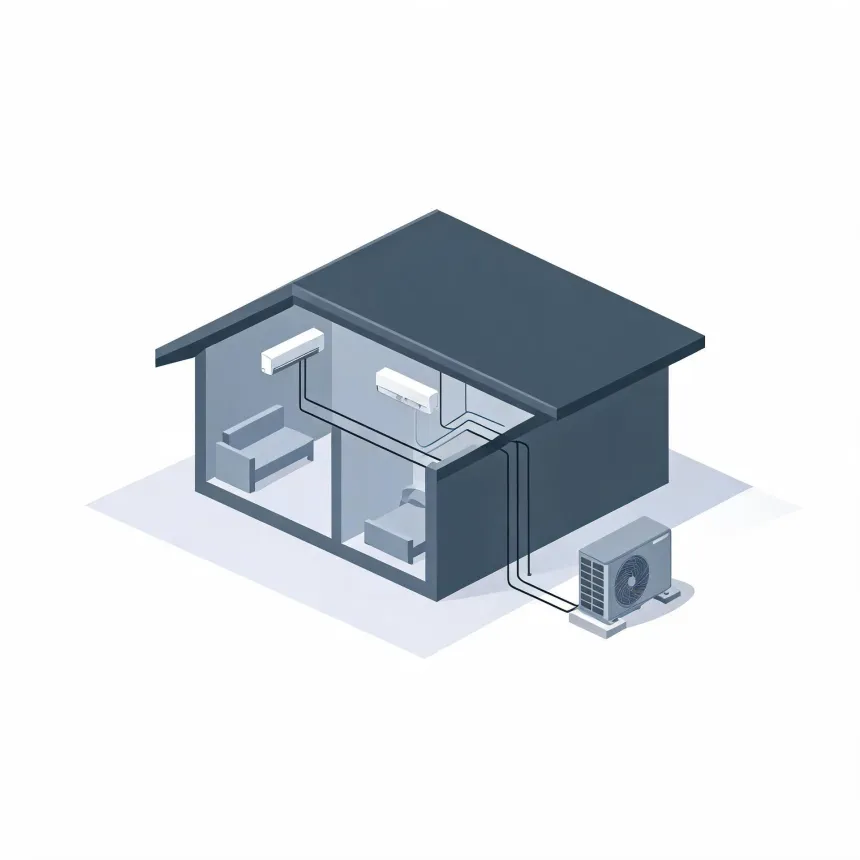
- A single outdoor unit can run one indoor head or several, depending on the system. Single-zone systems cover one room or open area. Multi-zone systems tie one outdoor unit to several indoor heads, each with its own thermostat, so bedrooms and living areas can be set differently. How many zones a given outdoor unit can support is a spec that varies by model, so a contractor sizing the job will match the equipment to the rooms you want covered.
- Can a mini split heat a whole house?
- Yes, if it's sized and placed for the whole house rather than one room. Whole-home mini split setups use multiple indoor heads, one per room or zone, all run from one or more outdoor units, in place of a ducted furnace. Oxford's winter nights average 34°F, well within what a modern heat pump is built to handle. Whether it makes sense for your house depends on the layout and how many zones it would take to reach every room, which is something a contractor works out by walking the house.