Mini Split Installation in Holly Springs, MS
A new system here will heat from October through April and cool from May through September every year. Tell us about the house, and a licensed contractor who covers Marshall County will get in touch.
Tell us about the job
It takes about a minute.
Holly Springs asks for both heat and cooling from the same system
Your mini-split works almost all year here. Heat from October through April, cooling from May through September, that's every month covered. Winter nights average 33°F, mild enough that a heat pump can carry the heating load without much help. Summer afternoons average 90°F, so the same system needs to pull real heat out of the house for five months straight.
A new unit installed today has to meet 14.3 SEER2 for cooling and 7.5 HSPF2 for heating, the federal minimum for split-system heat pumps built since January 2023. Mississippi sees its share of storms, including power outages, so ask the installer how the unit you're getting handles a restart once power comes back on.
- 7 months
- October through April, your system heats
- 5 months
- May through September, it cools
- 33°F
- the average winter night it heats against
- 90°F
- the average summer afternoon it cools against
NOAA nClimDiv, 1991–2020 normals
Mississippi requires HVAC contractors to hold a state license.
The license is issued to the contractor, not to each job, so it covers this installation the same way it covers any other work the contractor takes on. Mississippi's State Board of Contractors is the body that tested and licensed them, and that record backs the person in your house rather than this particular job.
Most cities and counties also require a permit to install a mini-split, with an inspection once the work is done. That inspection is what checks the installation itself, separate from the contractor's license.
Source: Mississippi State Board of Contractors
- Is a mini split worth it?
- For most homes it comes down to what rooms need heat or cooling and whether ductwork already reaches them. A mini split heats and cools without ducts, so it works well for an addition, a converted garage, or a house that relies on window units or space heaters. Homes here need heat from October through April and cooling from May through September, so a system that does both jobs runs nearly all year. A contractor can look at the space and say whether a mini split fits better than extending existing ductwork.
- How many rooms can a mini split cover?
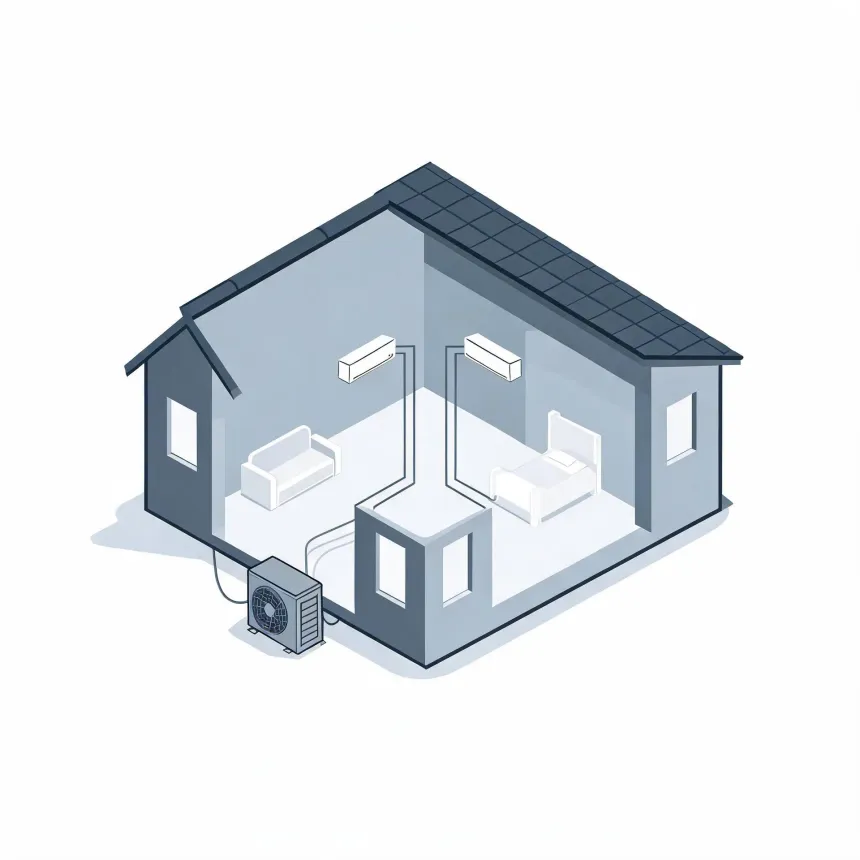
- A single outdoor unit can run one indoor head or several, depending on the system. A single-zone system covers one room or open area. A multi-zone system connects several indoor heads to one outdoor unit, with each head controlled on its own. How many rooms make sense on one system depends on the size of each room and how far the indoor heads sit from the outdoor unit, which is something a contractor works out room by room.
- Can a mini split heat a whole house?
- It can, if enough indoor heads are placed to reach every room. A mini split is a heat pump, so it draws heat from the outside air and moves it inside, the same way it works in reverse for cooling. Winter nights here average 33°F, and a heat pump sized and placed correctly still works at that temperature. Whether one outdoor unit is enough for the whole house or the job calls for more than one depends on the size of the house, which a contractor will size to the layout.