Mini Split Installation in Bay St. Louis, MS
A new system here will heat from November through March and cool from April through October every year. Tell us about the house, and a licensed contractor who covers Hancock County will get in touch.
Tell us about the job
It takes about a minute.
A mini-split here runs nearly all year
In Bay St. Louis a mini-split does not get much rest. Summer afternoons average 90°F from April through October, seven months of cooling. Winter nights average 43°F from December through February, with heat needed November through March. Between the two seasons, the system is working almost every month of the year.
Any mini-split installed new has to meet the federal minimum for a split-system heat pump, 14.3 SEER2 for cooling and 7.5 HSPF2 for heating. Wind is worth planning for too. Hancock County has logged 20 damaging wind events over the past ten years, and the outdoor unit needs to be mounted and secured with that in mind.
- 5 months
- November through March, your system heats
- 7 months
- April through October, it cools
- 43°F
- the average winter night it heats against
- 90°F
- the average summer afternoon it cools against
NOAA nClimDiv, 1991–2020 normals
Mississippi requires HVAC contractors to hold a state license.
The license is held by the contractor, not issued job by job, so it covers the business doing the work rather than this particular installation. Mississippi's State Board of Contractors is the one that tested and records that contractor, and that record exists whether the job is a mini-split, a furnace, or anything else in the trade.
For this installation, the license tells you the contractor is the one the state has on file. It does not replace the local step. In most cities and counties, putting in a mini-split needs a permit from the local building office and an inspection once the work is done, and that inspection is what checks the installation itself, not the license.
Source: Mississippi State Board of Contractors
- Is a mini split worth it?
- For most homes here, yes. Bay St. Louis needs cooling from April through October and heat from November through March, so a system running nearly year round is doing real work. A mini split handles both from the same unit, and it does it without ducts losing air along the way. Whether it makes sense for your house depends on the rooms you're trying to cover and what's heating or cooling them now, and a contractor can walk through that with you.
- How many rooms can a mini split cover?
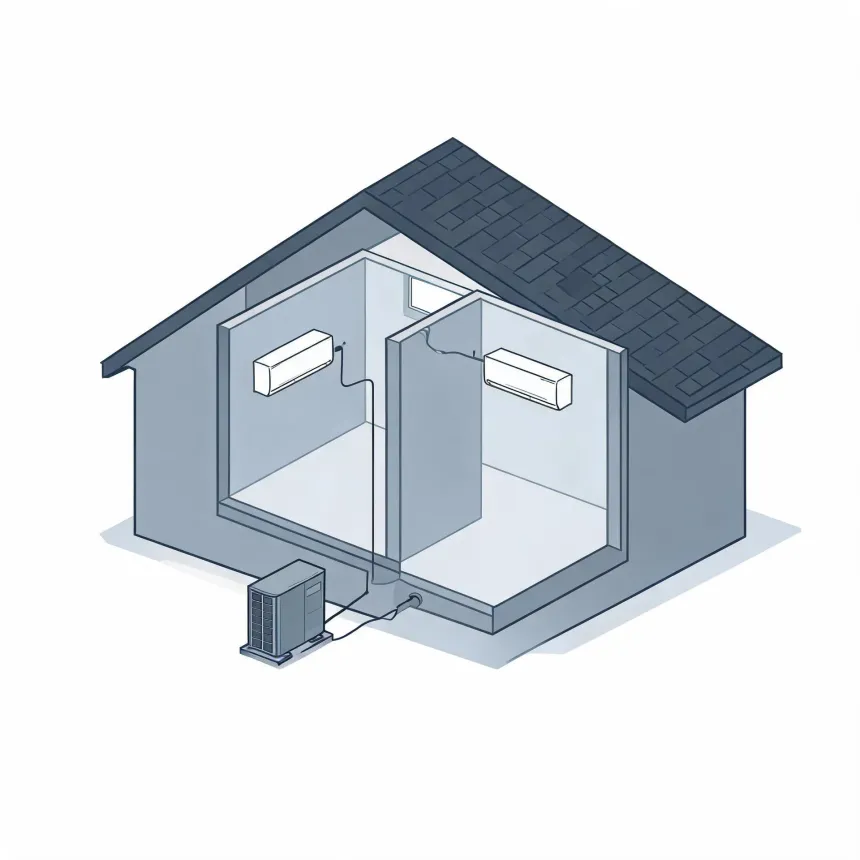
- A single outdoor unit can run more than one indoor head, so it depends on which system you install. Single-zone systems cover one room or one open area. Multi-zone systems tie several indoor heads to one outdoor unit, with each head controlled on its own, so you can cover a handful of rooms and set each one differently. How many zones your house needs comes down to the layout, and that's something a contractor sizes for the specific rooms.
- Can a mini split heat a whole house?
- It can, if enough zones are installed to reach every room and each one is sized for that space. Mini splits are heat pumps, so the same unit that cools in summer heats through the winter, which matters here since Bay St. Louis needs heat from November through March. A house with open rooms and few walls might get by on one or two zones. A house with separate rooms down a hallway will need a head in each one to actually heat evenly. A contractor can look at the floor plan and say what it takes for yours.