

The flap sitting flush
This is what a clear vent looks like. The louvered flap lies flat against the siding, open only when the dryer pushes air out, closed the rest of the time. Nothing can get in or build up behind it.
Get matched with someone who does this kind of work in DeSoto County.
Get my matchA bird in your dryer vent usually means a nest, and spring is when it happens most. The vent hood outside your house has a flap that is supposed to keep it shut when the dryer isn't running, but if that flap is stuck, bent, or missing, it leaves an open, sheltered tube that looks like a good place to raise young. Once there's a nest built up, lint, feathers, and twigs block the vent, and your dryer has nowhere to push the hot, damp air it makes. Loads start taking longer to dry, the dryer may run hotter than it should, and the air coming out the vent hood slows to barely a push or stops. Left alone, it's also a fire risk, since blocked vents trap heat and lint together. This isn't something to clear by hand if the nest is deep in the duct. It takes someone who can get the vent fully open again and put a guard on the hood so it doesn't happen a second time.

A vent flap works on a simple hinge, and it only takes a little lint buildup or a bent louver to keep it from falling shut on its own weight. Once it hangs open even an inch, a bird can work its way in. In a few days of spring, a finch or sparrow can build enough of a nest to block most of the airflow out of that vent.

A dryer pushes hot, damp air out through that vent every time it runs. If a nest is blocking it, the air backs up into the duct instead. Drying times get longer, the dryer runs hotter than it should, and lint that would normally blow outside collects in the duct instead. That trapped lint is dry and sits close to the heating element, which is the real risk with a blocked vent.
You run a load and hear chirping, or a scratching that starts up a few seconds after the drum does. Clothes are taking longer to dry than they used to. Outside, the vent hood flap sits open instead of flat against the wall, and there's lint or straw caught in it, maybe loose grass sticking out of the opening. Some homeowners catch the smell first, a stale, closed-in odor near the dryer that wasn't there before. A nest in the vent blocks the path your dryer needs to push hot, damp air outside. The heat and moisture have to go somewhere, and a packed vent is one of the more common reasons dryer vents catch fire.
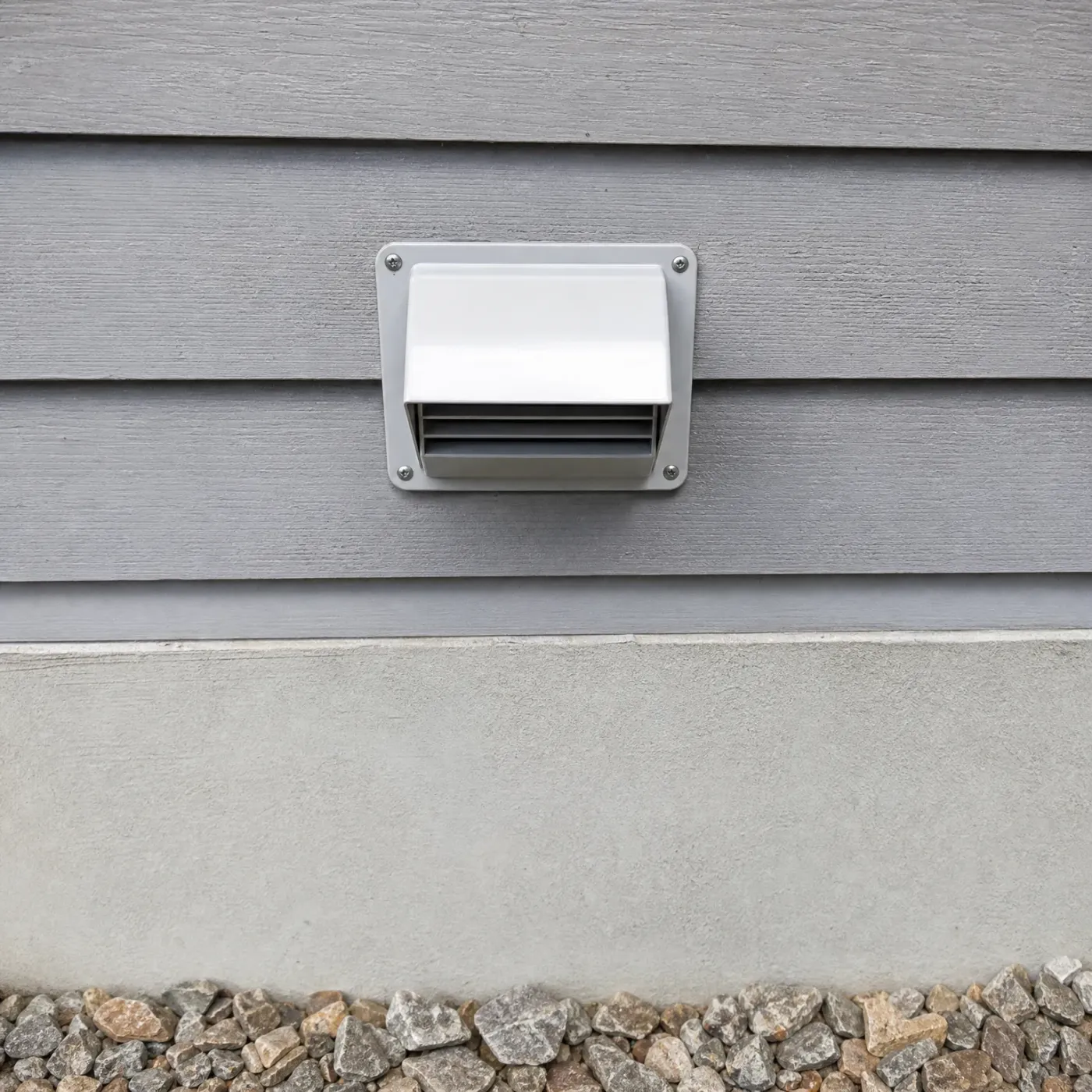
This is what a clear vent looks like. The louvered flap lies flat against the siding, open only when the dryer pushes air out, closed the rest of the time. Nothing can get in or build up behind it.
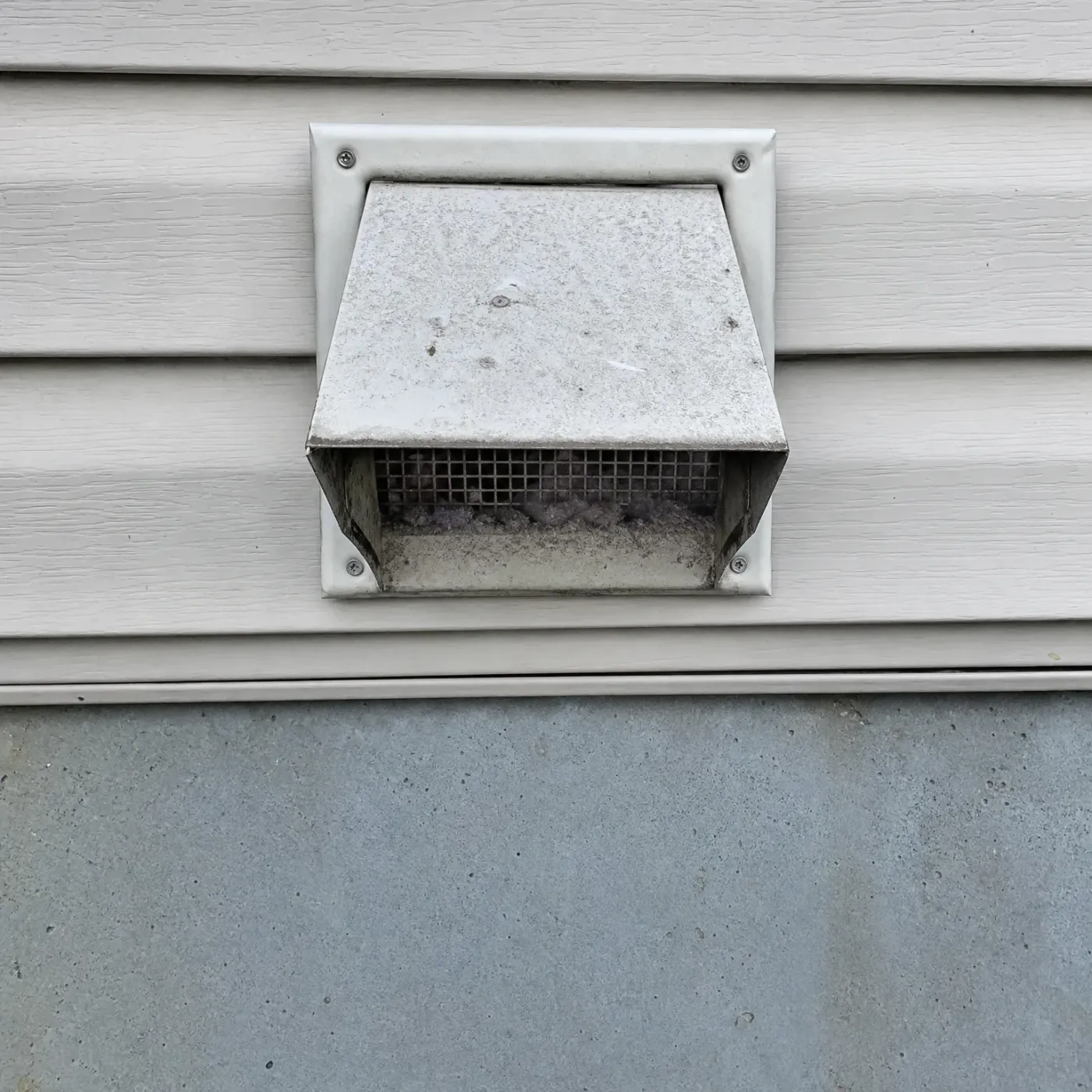
This cap is coated thick enough to see from the yard, and that buildup is what props a flap open in the first place. A vent in this shape is slow to dry clothes even before a bird adds a nest behind it.




Once a bird finds that gap in the flap, it doesn't take long to move in. A nest can go from nothing to finished in two or three days, built out of whatever lint the dryer has been pushing outside. That lint is soft and warm, so the bird keeps carrying more of it back into the pipe as the nest grows. The nest ends up sitting between the hood and the dryer itself, right where the pipe narrows, and that's exactly where all the heat and moisture from a running dryer needs to escape. With the path blocked, the dryer works longer to dry the same load, and the heat that should be venting outside backs up toward the lint trap and the drum instead. If there are eggs or chicks in that nest, clearing the vent isn't as simple as pulling out a lint clog. And if a bird gets stuck in the duct and doesn't get out, what's left behind can keep blocking airflow long after nesting season is over.


Skip searching for someone who cleans dryer vents in DeSoto County.
Get matched with a DeSoto County pro who cleans dryer vents.
Sending the form costs nothing.
2.68 people per household on average
The average DeSoto County household is 2.68 people, so a dryer that's slow to dry or stuck shut is laundry piling up for a full house, not one person's problem.
Half the homes here were built by 1999
Half the homes in DeSoto County were built in 1999 or earlier, per the Census. An older vent run has had more years for the flap hinge to weaken or the louvers to bend.
Power here costs 13.72 cents per kilowatt-hour
Electricity here runs 13.72 cents per kilowatt-hour. A nest blocking the vent makes the dryer run longer to finish a load, and that time adds up on the bill.
ACS 2020-2024 · EIA-861 2025


A contractor doesn't just open the hood and pull out what's visible. The work starts outside, at the flap, checking whether it swings freely or whether lint and nest material have it pinned open. From there the vent run gets cleared in sections, working back from the hood toward the dryer, since a nest built over a few days of spring weather can sit well past where a hand can reach. A camera or a probe run through the duct shows how far the blockage goes before anyone decides whether the vent needs to be opened up along the way. Getting the nest out isn't the end of it. Loose feathers, down, and bits of lint get vacuumed from inside the duct itself, not just cleared from the opening, because anything left behind catches more lint and narrows the pipe again. Once the run is clear, the flap gets a real check: the hinge, and how flush it sits against the siding when it falls shut. That gap is how the bird got in to begin with, and a vent that's clean but still has a flap hanging loose is an open invitation for the next one. Spring brings this around every year in DeSoto County, and a vent that got cleared out last year isn't guaranteed against a new nest this year if that flap was never fixed.
With close to three people in most DeSoto County households, that dryer is likely running almost every day. A blocked vent means slower drying and a bigger backup of wash for everyone in the house, not just whoever started the load.
ACS 2020-2024
You clear the nest yourself and the flap still won't seat right, because the hinge is bent or the lint behind it never came out. The bird finds the same gap again, or another one does.
A cleaning works the vent in sections back to the dryer, not just the few inches you can reach from outside, and checks that the flap itself moves and seats the way it's supposed to when the dryer shuts off.



A bird in the vent comes down to one thing: a flap that no longer closes. Everything on this page points back to that, whether it's a nest built in three days or lint packed in behind the hood holding it open an inch. Clear the nest without fixing why the flap stuck open, and the vent is right back where it started, this spring or next.
Finding someone to deal with it is its own chore, calling around DeSoto County, explaining the chirping and the slow-drying loads more than once, sorting through quotes for a job most people never expected to need. Answer a few questions here and a contractor who takes on vent cleaning in Southaven will reach out to you directly, already knowing what's going on with your vent before they pick up the phone.


Find a dryer vent cleaning pro in DeSoto County