




Is a clogged dryer vent a fire risk in Gulfport, MS

Skip searching for someone who cleans dryer vents in Harrison County.

Skip the search

Is a clogged dryer vent really a fire risk in Gulfport?

You run a load of towels on a humid evening and notice the dryer takes two cycles to finish, or the top of it feels warm to the touch. Someone mentioned a clogged vent can start a fire, and with how often the dryer runs in a house like yours, that's not a thing you want to find out the hard way.

Yes, a clogged dryer vent is a real fire risk

Lint is fuel. When it builds up in the vent, hot air can't escape the way it's supposed to, so heat backs up inside the dryer around the drum and the heating element. That trapped heat is what ignites the lint. It isn't rare. Clothes dryer fires are one of the more common appliance fires reported in homes, and a blocked vent is the main reason why. In Harrison County, where dryers run most of the year because of how long and muggy the summers are and how much laundry a household does, that vent gets more use than it would somewhere with a shorter humid season, which means more lint moving through it and more reason to have it checked.

A smiling woman with long dark hair in a gray sweater sits behind a white countertop holding a glass of red wine, with a dimly lit living room and dark kitchen island in the background.
A woman in a beige knit sweater with her hair up laughs while looking to the side, seated in a dimly lit living area with a sofa, windows and a kitchen counter behind her, a glass of red wine in the lower right foreground.
A woman in a black sweater laughs while seated at a light stone counter with a glass of red wine, in a dimly lit living and dining room with bookshelves, a table lamp and framed artwork behind her.
A smiling woman with long dark hair in a beige sweater sits at a granite counter with a glass of red wine, with a living room, fireplace and dining area behind her.

What does your household mean for your dryer vent risk?

  • 2.48 people per household on average

    With 2.48 people in the average Harrison County household, there's a family's worth of towels, sheets and clothes running through that dryer most weeks, and more loads means more lint working into the vent.

  • Half the homes here were built by 1994

    Half the homes in Harrison County were built in 1994 or earlier, and a vent run that old has had three decades to pick up dents, sagging sections or bad connections where lint collects.

  • Power here costs 14.63 cents per kilowatt-hour

    At 14.63 cents per kilowatt-hour, a dryer straining to push air through a clogged vent runs longer and costs you more each time, on top of the fire risk a clogged vent carries.

ACS 2020-2024 · EIA-861 2025

A white hooded dryer vent with a louvered opening mounted on light beige horizontal lap siding above a concrete foundation and sidewalk.

Vent clear and open

This is what the cap should look like. Air moves through the louvers without a fight, carrying the moist air out and the lint with it. A dryer venting like this runs one cycle and shuts off, and the cap itself stays cool enough to touch.
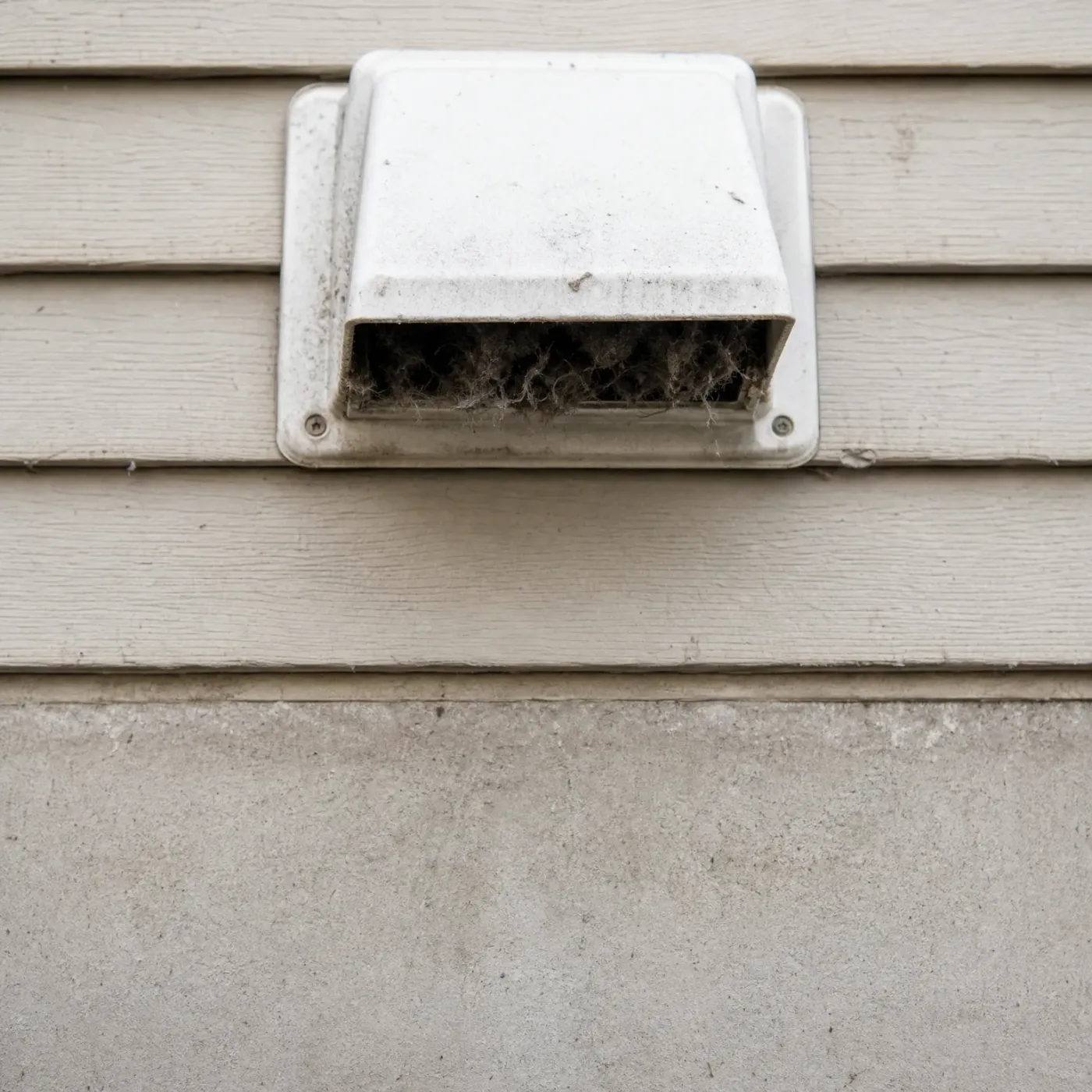

A white plastic dryer vent hood clogged with grey lint, mounted on beige horizontal lap siding above a concrete foundation wall.

Vent packed with lint

This cap is doing almost nothing now. The louvers are buried under gray lint, so the moist air backs up into the duct instead of leaving the house. That trapped lint sits right next to a heat source every time the dryer runs.

What are you noticing with your own dryer

A load that used to take one cycle now takes two. The dryer runs hot to the touch on top or on the front panel. Clothes come out warm but not fully dry, or they smell faintly scorched. You open the lint trap every time but the air coming from the outside vent cap barely moves, maybe none at all. Lint has started showing up behind the dryer or around the vent opening outside. Any of these means less air is getting out than should, and the lint that isn't leaving with it is building up somewhere in the line. That buildup is what catches. A dryer working this hard to push air through a blocked vent is also running its heating element longer than it needs to, right next to the lint that's piling up inside the duct.

A white hooded exhaust vent with a louvered opening mounted on white horizontal lap siding, with blank white space at right.

Why lint catches the way it does

Lint is dried fiber, and dried fiber burns fast once it gets hot enough. A dryer's heating element sits right at the point where air enters the drum, so any lint working back toward that element is sitting close to the one part built to get hot. In a clear vent, that air and lint keep moving outside before heat has a chance to build around them.

A metal hooded exterior vent cover screwed to beige horizontal lap siding, next to a plain white wall corner.

Where the heat has nowhere to go

A blocked vent traps hot, humid air inside the duct instead of pushing it outside. That air has to go somewhere, so it backs up into the dryer cabinet and across the lint trap housing, both of which sit full of fine lint most of the time. Heat sitting against packed lint for an hour or more, load after load, is a different situation than heat passing through for a few minutes on its way out.

A closed laptop and a ceramic mug of coffee on a wooden table, with a blurred kitchen counter, cutting board, utensil jar and plant in the background.

What happens inside the vent run itself

A straight vent run is rare. Most houses have at least one elbow where the line turns to get out through the wall or the roof, and lint builds up fastest right at those bends, not in the straight sections. Each turn slows the airflow a little, and slower air drops its lint instead of carrying it out to the cap. Over time that buildup narrows the path until the dryer is pushing hot air against a wall of its own lint. The motor runs longer to move the same load of wet laundry, the element stays on longer to keep up, and the air coming back into the drum is warmer than it should be because it has nowhere to go.

Finding out how bad your own run is means getting someone out to look at the actual turns and length of your line, which usually takes a few calls and a wait before anyone shows up. A local contractor who cleans vents in Harrison County homes all year has likely already worked on a line laid out like yours, in a house built the same way, and knows which bend tends to cause the worst of it before taking the vent apart to check.

A mug and a small round vase sit on a wooden windowsill beside sheer and heavier curtains, with blurred autumn trees seen through the rain-speckled window and a sofa with cushions and a throw in the foreground.
  1. Lint builds up thickest at the elbow bends in the vent line.

  2. Airflow slows, so heat and moist air stop clearing the drum.

  3. The heating element keeps firing against that trapped, hot air.

  4. Trapped heat lets built-up lint reach its ignition point.

2.48 people per household on average

At 2.48 people, most Harrison County households aren't doing wash for a crowd. Still, towels and sheets add up week to week, and every load pushes more lint into that vent line whether it's one person living there or four.

ACS 2020-2024

A smiling middle-aged man in a dark green sweater sits at a candlelit table with a glass of red wine and a bowl of salad in the foreground.
A woman in a cream knit sweater reclines on a beige couch with eyes closed and a slight smile, a gray hardcover book resting open on a textured blanket over her lap, with a lit table lamp and a leafy plant in the dim background.

No calling every shop in Harrison County

The pro who gets in touch is licensed in Mississippi and works in Harrison County.

Asking costs nothing, and the choice to hire stays yours.

A white hooded dryer vent with a square mounting plate screwed onto light gray horizontal vinyl siding, above a gray stucco-textured lower wall.

Vent clear and open

This is what the cap should look like from outside. The flap sits open and the louvers are clear, so air and lint both make it outside on their way out of the house. A dryer venting like this finishes a load in one cycle.

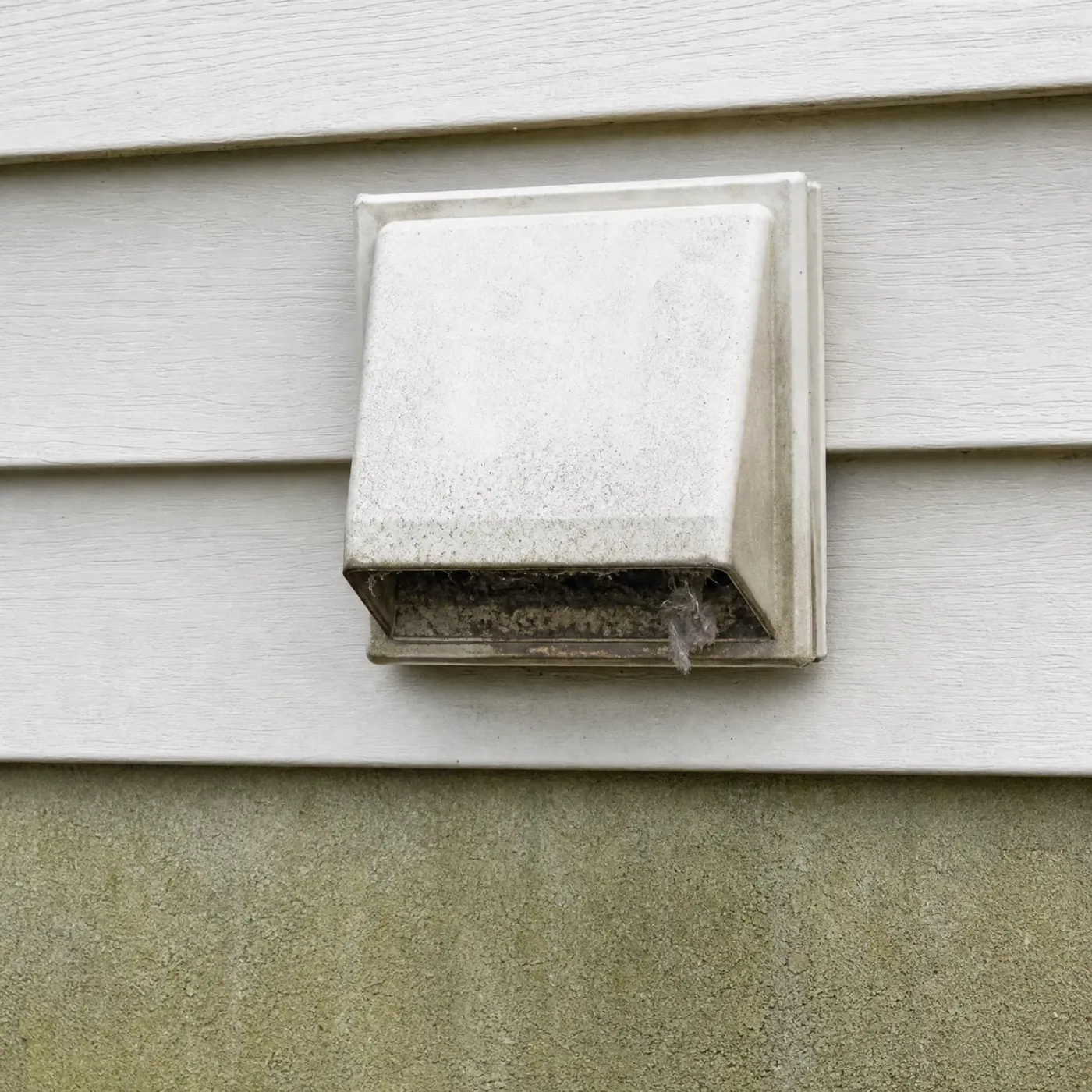
A white plastic dryer vent hood mounted on light-colored horizontal lap siding, with lint caught in its lower opening and a green-stained foundation wall below.

Vent clogged at the cap

Lint has built up right at the opening and a tuft is caught in the flap, so it can't close flush anymore. If lint is backing up this far out, more of it is packed into the line between here and the dryer.

Clean It Yourself or Call In Help

Clean it yourself

  • You can pull lint from the trap every load, but that only catches what never made it into the vent line.
  • Reaching the elbow bends behind the wall takes rods or a brush long enough to clear the full run, not just the first few feet.
  • If the vent exits on the roof, clearing it means getting up there safely with the right tools.
  • Without knowing what a clear vent feels like, it's hard to tell if the run is actually open or just partly better.
  • A missed section still traps heat and lint even after the parts you could reach are clean.

Have it cleaned

  • A contractor who works on vent lines every week in Harrison County knows where lint builds up fastest and checks those spots first.
  • The whole run gets cleared in one visit, including the elbows and the exterior cap, not just the parts you can reach by hand.
  • You call one local, licensed contractor instead of getting quotes from several companies and explaining the problem each time.
  • Equipment made for the job clears the line without guessing whether it's actually open at the end.
  • Someone who does this regularly can tell you if the dryer's long cycle times were coming from the vent or from something else in the machine.
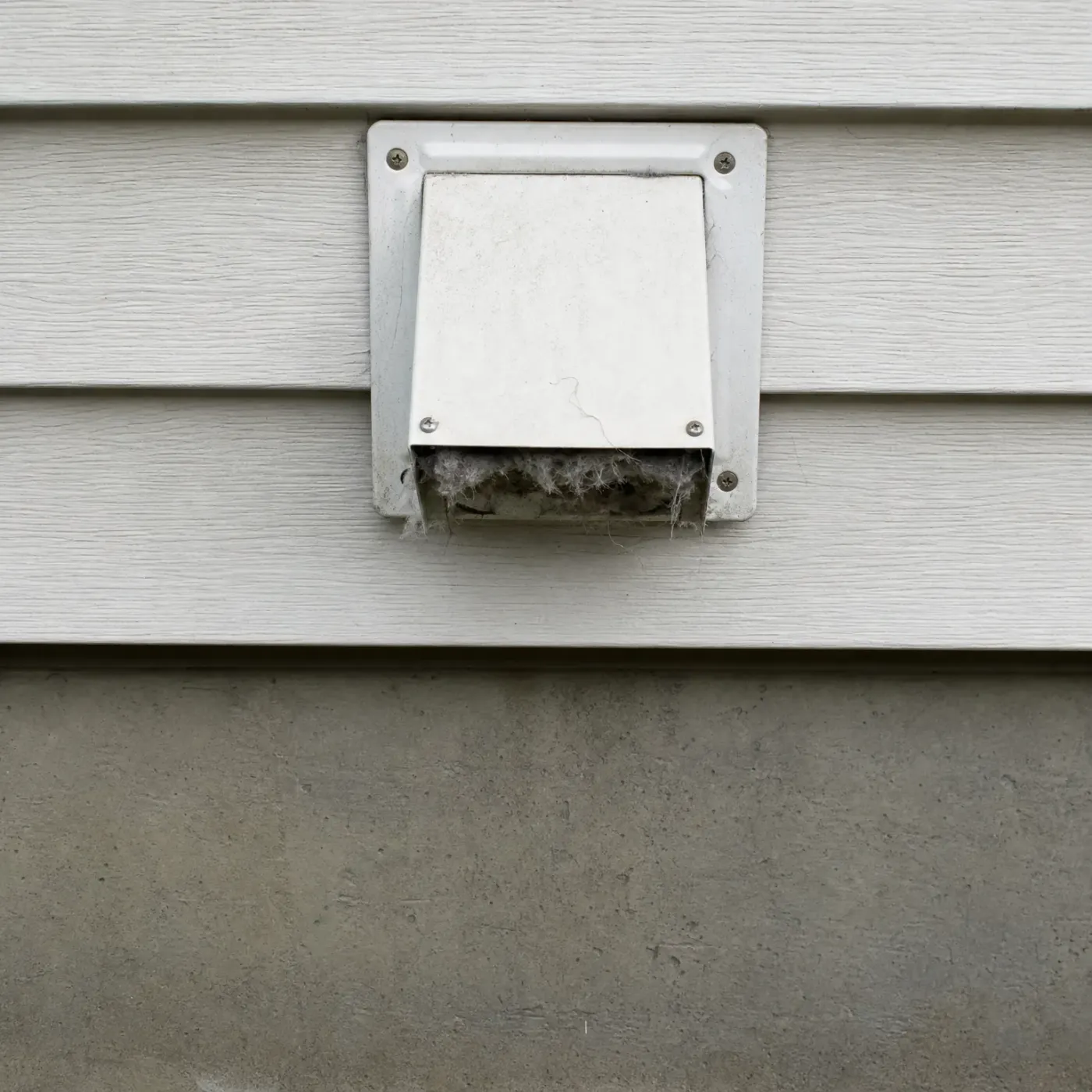
A white plastic dryer vent hood with a hinged flap mounted on light grey horizontal lap siding, with lint clogging the opening beneath the flap and a concrete foundation wall below.
Before you get your dryer vent cleaning
A white hooded dryer vent with a grille mounted on tan horizontal lap siding above a concrete slab.
After you get your dryer vent cleaning

Doing it yourself

You find someone to clean it, explain the problem over the phone, maybe get a few quotes and wait to see who calls back first. That's time spent before anyone touches the vent.

Skip the calls

One call, one contractor

A local contractor who works on vent runs all over Harrison County gets the details once and knows which bends in your line usually give the trouble.

Skip the calls

A clogged dryer vent is a real fire risk, not a maybe. Lint builds up at the elbow bends, airflow slows, the heating element keeps firing into trapped hot air, and that lint eventually reaches its ignition point. That's the mechanism, and it plays out the same way in any house in Harrison County, whether one person lives there or four. You don't need to guess at any of this with your own vent. A local contractor who clears vents in Gulfport homes all year knows which bend in the run tends to pack tightest and what a dangerous buildup looks like versus a normal one. You get matched with one contractor, not a handful calling you back at once, so there's no explaining the problem over and over to different people. The dryer running two cycles instead of one, the warm top panel, the faint scorched smell, all of it points to the same thing. Clearing it is the straightforward part once someone who knows the equipment is looking at it.

A dark-clad house with large windows beside a gravel driveway lined with in-ground path lights, ornamental grasses and hydrangeas, with distant hills and an orange sunset sky.

Dryer Vent Cleaning

Explain it one time

Duct and vent cleaningHarrison County, MS
Step 1 of 3

What kind of equipment?

  • A dimly lit living room corner with a beige upholstered sofa holding a dark green cushion and a chunky knit throw, beside a wooden sideboard with a lit ceramic table lamp, a small potted plant, and a wooden bowl, with a framed artwork on the wall and a mug on a book in the foreground.
    • Get matched with a Harrison County pro who cleans dryer vents.
    • Get matched with a pro who works on dryer vents in Harrison County.
  • A round wooden coffee table holding a round stone vase of green foliage, a lit candle in a glass container, and a small dark bowl, with a beige sofa, cushions and knit throw behind and a window at left.
    • Send it once and finding someone is no longer on you.
    • Send the form and finding a dryer vent cleaner is handled.
  • Sunlit living room with a wooden coffee table holding a ceramic vase of leafy branches and a carved wooden tray with two stacked books, in front of a beige sofa with tan and green cushions and a potted plant near a window.
    • Explain the job once and skip repeating it on every call.
    • Skip searching for a dryer vent pro and answer a few questions instead.
  • Interior corner with a lit ceramic table lamp and wooden bowl on a wood sideboard, a framed picture and branch-filled vase behind, a knit throw over an upholstered chair, and a lit candle in a glass holder, stoneware mug and round planter of green foliage on a wooden table in the foreground.
    • Only one pro gets your request, so you hear from one company.
    • Your request stays with one local pro.