Signs your ducts need cleaning in Southaven, MS

A galvanized steel round duct with a 90-degree elbow and a white louvered vent cover on one end, shown against a plain gray background.
Let a pro reach out

How do I know if my ducts need cleaning?

You haven't had the ducts looked at since you moved in, and lately you're wondering if that matters. Maybe someone in the house has been sneezing more, or you noticed dust settling back on the shelves within a day or two of cleaning them. You're not looking for a sales pitch, just a straight answer on what to actually watch for before you decide it's worth doing anything about.

Dust coming back fast, musty smell when the air runs, or visible buildup at the vents

If dust settles back on furniture within a day or two of cleaning, that's air moving through dirty ducts and dropping it right back where it came from. A musty smell when the furnace or AC kicks on is another sign, especially in a house that runs the AC hard through a long muggy summer like this one, since moisture in the ductwork gives mold something to grow on. Pull a vent cover off and look inside with a flashlight. If you see a layer of dust or debris you can't miss, that's not something a filter change fixes. Weak airflow from the vents, even after a new filter, points the same direction. None of these by themselves prove it, but two or three together are worth having someone check.

Unfinished basement with concrete floor and walls, exposed wood joists, steel support posts, and large galvanized sheet-metal ductwork running to a furnace or air handler against the far wall.

Clean, clear ducts

Supply and return runs are open and unblocked, so air moves through them at the rate the furnace was built to push it. No dust ring at the register, no musty smell when the blower kicks on. Whatever filter you're running is doing the only filtering the air gets.


Galvanized sheet-metal ductwork and round pipes run along a wooden floor joist ceiling above a bare concrete wall and floor.

Ducts needing attention

Dust has built up along the inside of the metal, and some of it is getting past the register and back into the room. You might see it settle on furniture again within a day of cleaning, or notice a stale smell when the system starts up, through the same runs shown here.

Duct Buildup or Something Else

Signs to watch for

  • Dust settles back on shelves and TV screens within a day of cleaning them.
  • A register that used to blow strong air now barely moves anything, even with the filter fresh.
  • You can see a gray ring of buildup around the supply registers or the return grille.
  • The air smells musty or stale within a minute or two of the furnace or AC kicking on.
  • Someone in the house has started sneezing more at home than anywhere else, especially once the system runs.
  • You find pieces of dead insects, rodent droppings, or shed fur around a register.

When it's something else

  • One room runs warmer or cooler than the rest, which usually points to a damper or duct sizing issue, not dirt.
  • The system cycles on and off more than it used to, which is more often a thermostat or airflow problem elsewhere.
  • Your energy bill jumped but nothing in the house changed, which can mean a leak in the ductwork rather than buildup inside it.
  • A new smell shows up only when the heat first comes on in the fall, which is usually dust burning off the furnace itself.
  • The air feels thinner throughout the whole house, which often traces back to the filter rather than the ducts.
Unfinished basement with bare concrete floor and walls, exposed wood joists, metal ductwork, a furnace unit, steel support posts, and a small window.

Ducts doing their job

Air moves through the metal runs overhead without a fight. The furnace pushes it out one end and it reaches every register at full strength, no matter how far the run travels across the joists.

Empty basement with bare concrete walls and floor beneath an exposed wood-joist ceiling carrying galvanized sheet-metal ductwork, round ducts and pipes.

Ducts working against you

The same runs are still there, but something inside is slowing the air down. A furnace working harder to push air through a blocked duct wears sooner than one that isn't fighting its own ductwork.

Why does this room never feel right?

Walk through the house and check which rooms the air actually reaches. A back bedroom or the room over the garage stays warmer in summer and colder in winter than the rest of the house, no matter what the thermostat says. Someone in the house has had a cough or stuffed-up nose that won't quite go away. The furnace runs longer to hit the same temperature it used to hit faster. Open a supply register and look inside with a flashlight. If you see a felt of gray dust lining the metal a few inches in, that same dust is moving through the air in every room the duct feeds, and it keeps the system working harder than it should have to.

A smiling bearded man in a dark green henley shirt sits on a blue-gray couch in a living room, with a bowl of popcorn in the foreground and a houseplant and window behind him.
A smiling man in a dark sweatshirt reclines on a gray sofa in a living room, with a wooden bowl of popcorn on a table in the foreground and a dining area, shelving, and pendant lamp behind him.
A smiling man in a navy long-sleeve shirt reclines on a sofa in a living room, with a bowl of popcorn on a wooden coffee table and framed pictures on the wall behind him.
A smiling man in a dark green long-sleeved shirt sits on a gray sofa in a living room, with a bowl of popcorn in the foreground and windows and a potted plant behind him.

Send one request and you're done looking

By now you've probably checked more than one of these against your own house. Maybe it's the dust, maybe it's the room that never cools off right, maybe it's a smell you can't place when the furnace kicks on. Once you've noticed two or three of these at once, the question isn't whether something's going on in those ducts, it's who's going to go up there and look. That's the part that eats a weekend: finding someone in Southaven who does duct cleaning, calling around for a time that works, explaining the same list of signs to each one, then sitting with a stack of quotes trying to figure out who actually knows what they're doing. Send the form above and that work is off your plate. You still live with the house and the dust and the room that won't hold its temperature, but you're not the one tracking down who can fix it anymore.

What a dirty duct does to airflow

A duct lined with dust is a narrower duct. Air has less room to move, so the furnace works harder to push the same volume through the house, and the room at the far end of the run gets less of it than it should. That is the mechanical reason a register goes weak before anyone notices dust on the shelves. The blower motor was sized for a clear path. Buildup inside the sheet metal changes that math without changing anything on the thermostat, so the system runs longer to reach the same setting. Nothing in the house tells you this is happening except the signs themselves, because the ductwork is overhead or behind a wall and nobody looks at it until something feels off.

Why the smell shows up at startup

Dust and debris sitting in a duct run warms up the moment the blower starts moving air across it, and that first minute of airflow carries whatever is in there straight into the room. That is why the smell is strongest right when the furnace kicks on and fades after. It is not the furnace burning anything. It is air passing over material that has been sitting in a dark metal run, picking up a little of it each time, all winter. The same thing happens on the cooling side when humid Southaven air meets dust inside the ducts. It is one of the few signs you can check without a contractor: stand near a register at startup and notice if the smell is worse than a few minutes later.

A woman with dark hair in a bun sits on a beige sofa under a knit blanket with her eyes closed and an open book in front of her, with a lit lamp and houseplant in the background.
A smiling bearded man in a dark sweater sits at a dinner table with lit candles, a glass of red wine, and bowls of food, in a dimly lit room with a lamp and houseplant behind him.

A duct cleaning crew works from the inside out. They cut small access ports into the trunk line, then run a brush or a whip tool down each branch while a vacuum pulls at the far end, usually from the furnace side, so loosened dust and debris travel toward the vacuum instead of into your living room. Each supply and return run gets cleaned separately, register by register, because the vacuum can only pull hard enough to matter over a limited distance. A camera sometimes goes in first to show what is actually built up on the walls of the duct, and again after to confirm it came loose. The access ports get sealed back up when the work is done, and a good crew checks that seal, because a leaky port undoes a lot of what the cleaning accomplished. None of this touches the furnace itself or the coil inside it. It only clears the metal runs the air travels through to get to you.

Power here costs 13.72 cents per kilowatt-hour

At 13.72 cents a kilowatt-hour, the fan in a blocked duct system is costing you more every month just to push air through a narrower path. A cleaning crew opens that path back up, so the blower isn't straining to do the same job.

EIA-861 2025

  1. A technician checks every register and return for airflow and buildup.

  2. Small access ports get cut into the main trunk line.

  3. A brush or whip tool breaks loose dust packed inside each branch.

  4. A vacuum pulls the loosened debris out through the furnace side.

How old is the ductwork you're dealing with?

  • Half the homes here were built by 1999

    Half the homes in DeSoto County were built in 1999 or earlier, so if yours is one of them, the ducts have had decades to collect dust nobody's seen.

  • Heat runs November through March

    Furnace and AC both tie into the same runs, and here they share the work nearly year round, five months of heat, five months of cooling, with barely a break between.

  • Cooling runs May through September

    That split schedule means the blower is pushing air through those ducts most months of the year, so whatever's built up inside gets moved around the house a lot.

ACS 2020-2024 · NOAA nClimDiv 1991-2020

Where that leaves you

  • Dust back on the shelves within a day, a register barely moving air, a gray ring around the supply vents, and a musty smell at startup all point the same direction.
  • A back bedroom or the room over the garage running hotter or colder than the rest of the house usually traces back to the same blocked runs.
  • A furnace working harder to push air through a narrowed duct shows up on the power bill before it shows up anywhere else.
  • None of these signs on their own proves much, but two or three together is worth having someone look at.
  • Finding that someone, calling around DeSoto County, explaining the same four symptoms twice, comparing quotes, is its own chore on top of the problem.

None of this is a mystery once you've walked the house and paid attention. The dust that comes back fast, the register that barely moves air, the gray ring at the supply vent, the room over the garage that never matches the thermostat, the furnace running longer to do the same job. Each one by itself could be nothing. Put two or three of them together and you're looking at ducts that are restricting airflow somewhere in the runs, and the furnace and the power bill are both paying for it.

What the signs don't tell you is which branch is blocked or how bad it's gotten, and that's not something you can see by looking at a register. That takes someone inside the ductwork with the right tools, checking each run from the trunk line out. Getting to that point usually means calling around DeSoto County, explaining the same symptoms to three or four different outfits, and sitting on quotes trying to tell which one actually knows what they're doing. That's the part that eats an evening, not the cleaning itself.

You already know what you've noticed in your own house. The dust, the weak register, the room that's never right, the smell when the furnace kicks on. That's enough to know something's worth checking. What you don't have to do is spend the next few nights tracking down who can check it.

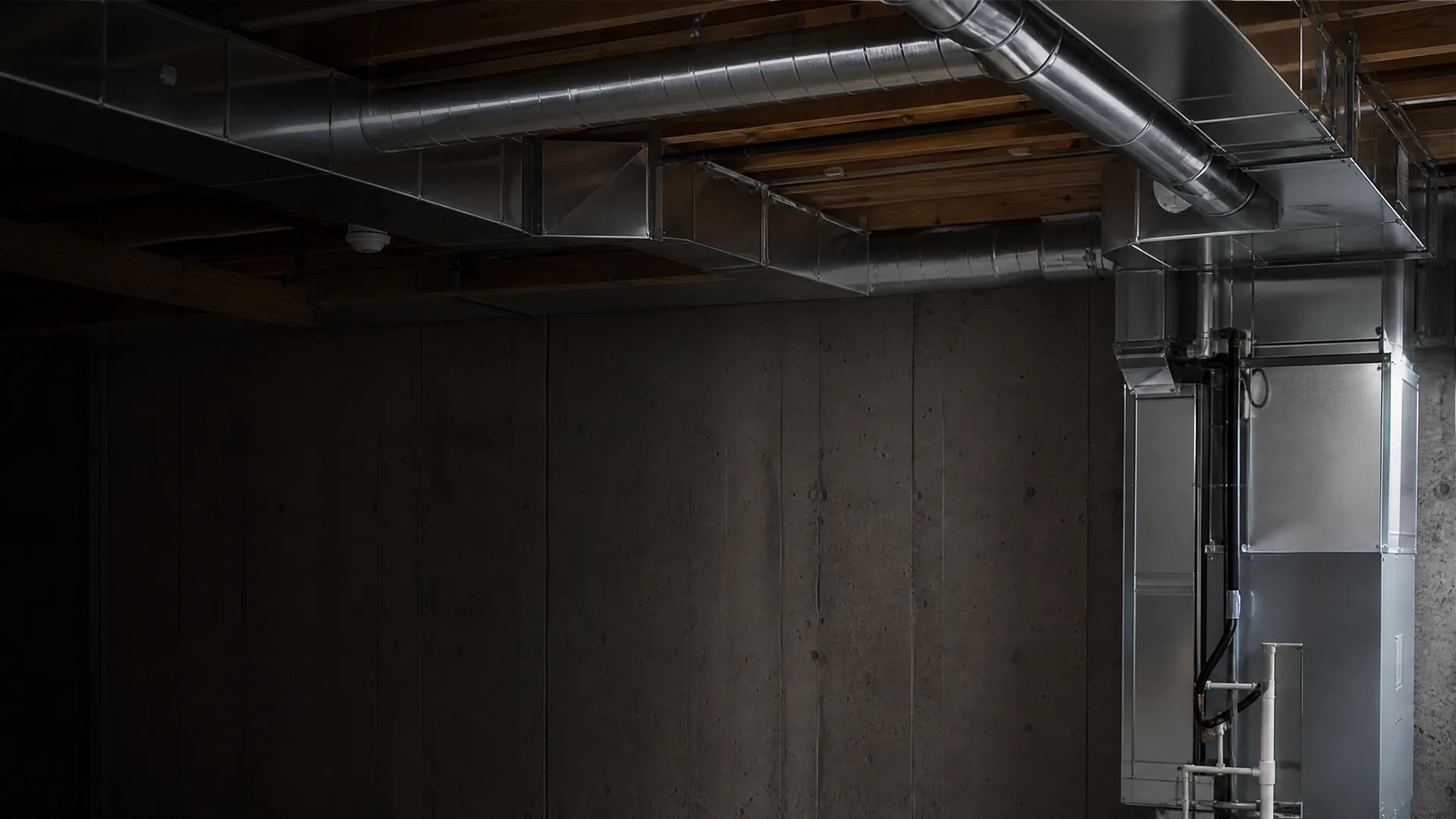
Unfinished basement with poured concrete walls, exposed wooden joists, and galvanized sheet-metal supply ducts and round pipes running along the ceiling to a furnace unit at right.

Finding a pro stops being your job

Fill out one short form instead of calling around.

Duct and vent cleaningDucts or ventsDeSoto County, MS
Step 1 of 2

What ZIP code is the job in?