Mini Split Installation in Laurel, MS
A new system here will heat from November through March and cool from May through October every year. Tell us about the house, and a licensed contractor who covers Jones County will get in touch.
Tell us about the job
It takes about a minute.

Laurel asks a mini-split to run almost year round
Eleven months out of the year, a mini-split in Laurel is either heating or cooling your home. Winter nights average 39°F from November through March, and summer afternoons average 91°F from May through October. There is barely a break between one season and the next.
A new unit installed here has to be sized for both jobs, not just the one that's easiest to picture. Any mini-split heat pump built since January 1, 2023 has to meet 14.3 SEER2 for cooling and 7.5 HSPF2 for heating, so that baseline is already covered. What matters more is getting a unit and an installation sized to the heat load and cooling load your house actually has, since it will lean on both sides of that rating most of the year. Jones County also sees its share of damaging wind, 160 events over the last ten years, so an outdoor unit installed here should go in mounted and placed with that in mind.
- 5 months
- November through March, your system heats
- 6 months
- May through October, it cools
- 39°F
- the average winter night it heats against
- 91°F
- the average summer afternoon it cools against
NOAA nClimDiv, 1991–2020 normals
Mississippi requires HVAC contractors to hold a state license.
The license is held by the contractor as a business, not issued job by job. That means the state has tested and recorded the company before they ever get to Jones County, but it doesn't mean a state inspector checks this particular mini-split install.
For this job, the local building office is what actually oversees the work itself. A mini-split installation typically needs a permit and a final inspection once it's in, and that inspection is what confirms the wiring and refrigerant lines were done right, separate from whatever the state license already vouches for.
Source: Mississippi State Board of Contractors
- Is a mini split worth it?
- For most homes here, yes. Laurel needs heat five months a year and cooling six, so a system doing both jobs stays in use nearly all year. A mini split also heats and cools by room, so you can condition the space you're using without running a whole-house system for one occupied room. Whether it's worth it for your house depends on how many rooms you need covered and what's there now, and a contractor can walk through that with you.
- How many rooms can a mini split cover?
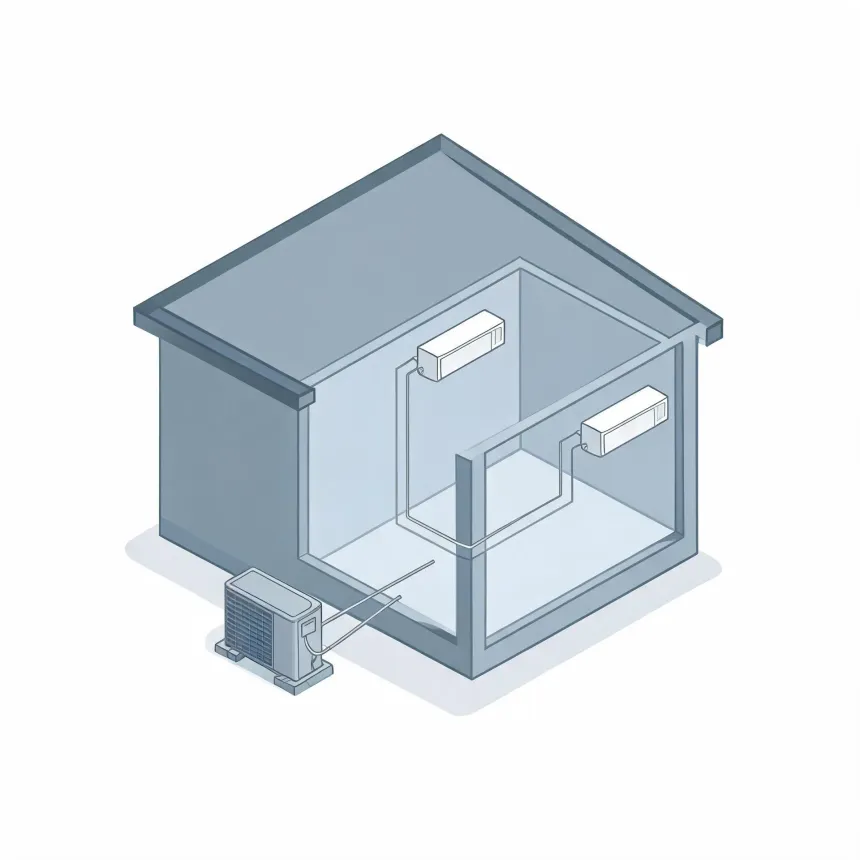
- A single outdoor unit can run one indoor head or several, depending on the system. Single-zone systems cover one room or open area. Multi-zone systems tie multiple indoor heads to one outdoor unit, so a single system can cover several rooms at once, each with its own thermostat. How many zones your house needs comes down to the layout and where you want separate control, which is something a contractor sizes for the actual rooms.
- Can a mini split heat a whole house?
- It can, if it's sized and placed to cover every room. A multi-zone mini split with enough indoor heads can heat a whole house the same way a central system does, just room by room instead of through ducts. Laurel's winter nights average 39°F, so the system has to be sized for that low, not just for milder days. Getting the coverage and capacity right for your house is a job for whoever installs it.