
HVAC Installation in Amory, MS
A new system here will heat from November through March and cool from May through September every year. Tell us about the house, and a licensed contractor who covers Monroe County will get in touch.
Tell us about the job
It takes about a minute.

Ten months of work, most of it in the heat
Amory asks a system to run almost year round. Summers push into the 90s in the afternoon, and that system needs to hold the house cool for five straight months, May through September. Winter is shorter but real, with nights averaging 35°F from December through February, so the heat side has its own five-month stretch from November through March. Only two months off in between.
Most homes here heat with electricity, which means the outdoor unit and the electric grid both matter for comfort. Mississippi saw storm outages hit 30% of households for at least a day in 2024, and this area has logged 70 damaging wind events and 4 winter storms over the past ten years. A new system should be sized and installed to handle that kind of run time, in both directions, without shortcuts.
- 5 months
- November through March, your system heats
- 5 months
- May through September, it cools
- 35°F
- the average winter night it heats against
- 90°F
- the average summer afternoon it cools against
NOAA nClimDiv, 1991–2020 normals
Mississippi requires HVAC contractors to hold a state license.
The state tested this contractor before handing out the license, and the Board of Contractors keeps a record of who holds one. That license belongs to the contractor, not to any single job, so it tells you the state has vetted the business behind whoever shows up at your door, not that this particular installation has been checked.
For the job itself, in Monroe County that check comes from the local building office. Putting in a new furnace, air conditioner or heat pump most places needs a permit, and the finished work gets an inspection before it is considered done. That inspection is what confirms the gas connections, wiring and refrigerant lines were put together right, separate from whatever the state license already tells you about the contractor.
Source: Mississippi State Board of Contractors
- When should I replace my HVAC system?
- Once repairs start costing more than they're worth, or once the system can't keep up on the coldest or hottest days. An old furnace struggling through a 35°F night or an air conditioner losing ground at 90°F is telling you something. Age matters too. A system running past the point where parts are hard to find or a contractor keeps patching the same problem is a system that's done. If you're already calling for repairs more than once a year, that's a sign worth listening to.
- Should I replace my furnace and air conditioner at the same time?
- If both units are old and near the end of their life, replacing them together often makes sense, but a contractor can tell you whether your specific setup calls for it. A furnace and air conditioner that share a blower and coil are matched to work together. Replacing just one can leave the other running against equipment it wasn't sized to pair with. If one system is much newer than the other, that's a different situation, and a contractor looking at both units can tell you what makes sense for your home.
- What happens during an HVAC installation?
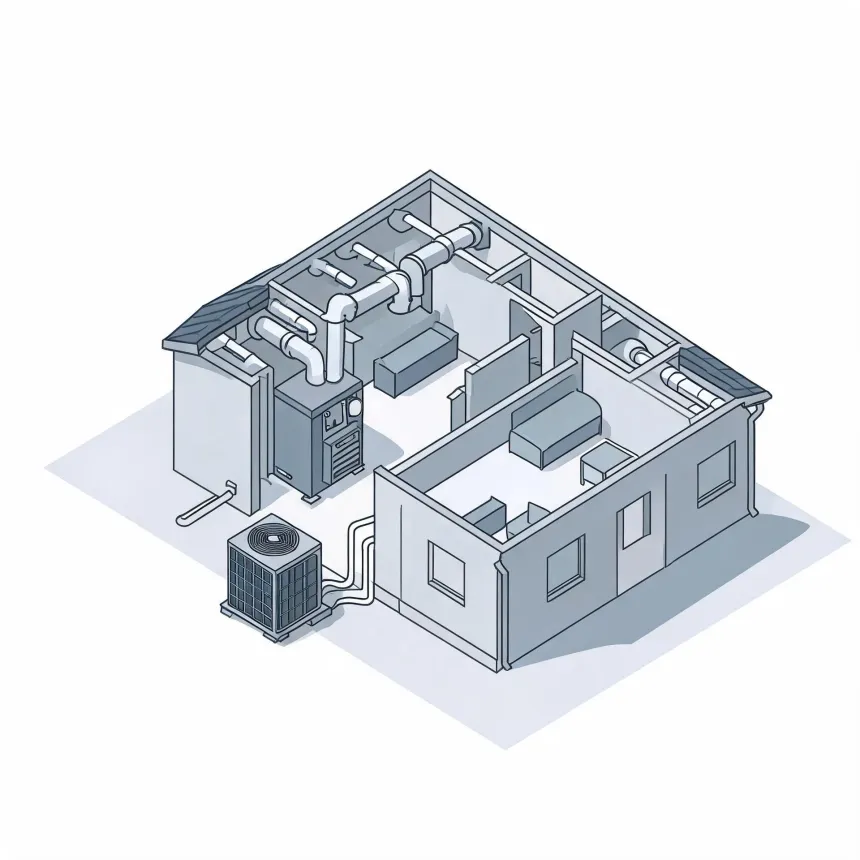
- A contractor removes the old furnace, air conditioner, or both, and sets the new equipment in place, connecting it to the ductwork, refrigerant lines, gas or electric supply, and thermostat. After that comes testing, checking refrigerant charge, airflow, and that the thermostat is talking to the system correctly. In most cities and counties this job needs a permit from the local building office, and an inspector checks the work when it's done. That inspection is there to confirm the installation was done correctly, so don't skip it even if a contractor doesn't bring it up first.