Mini Split Installation in Greenville, MS
A new system here will heat from November through March and cool from May through September every year. Tell us about the house, and a licensed contractor who covers Washington County will get in touch.
Tell us about the job
It takes about a minute.
Ten months of the year, your mini-split is working
Greenville homes need heat from November through March and cooling from May through September, ten months of the year with only a short break between. Winter nights average 37°F, summer afternoons average 91°F, and a mini-split installed here has to handle both ends without much rest.
Any mini-split heat pump manufactured from 2023 on has to meet 14.3 SEER2 for cooling and 7.5 HSPF2 for heating. In a place that runs the heat pump side five months a year, that heating number matters as much as the cooling one.
- 5 months
- November through March, your system heats
- 5 months
- May through September, it cools
- 37°F
- the average winter night it heats against
- 91°F
- the average summer afternoon it cools against
NOAA nClimDiv, 1991–2020 normals
Mississippi requires HVAC contractors to hold a state license.
The State Board of Contractors tests the contractor before issuing that license, then keeps a record of who holds one. The license covers the contractor as a business, not each job that contractor takes on, so it tells you this contractor met the state's bar, not that your mini-split installation was checked off by anyone.
That check comes from the local building office instead. In most cities and counties, installing a mini-split needs a permit before the work starts and an inspection once it's done, and that inspection is what confirms the unit was set up correctly, separate from anything the state license covers.
Source: Mississippi State Board of Contractors
- Is a mini split worth it?
- For most homes it is, especially where a room or addition has no ductwork running to it. A mini split heats and cools without any duct work, and it runs on electricity rather than gas. Greenville winters average 37°F and summers average 91°F, and a mini split sized for the space handles both ends of that swing. Whether it beats another option for a given room is something a contractor can work out after seeing the space.
- How many rooms can a mini split cover?
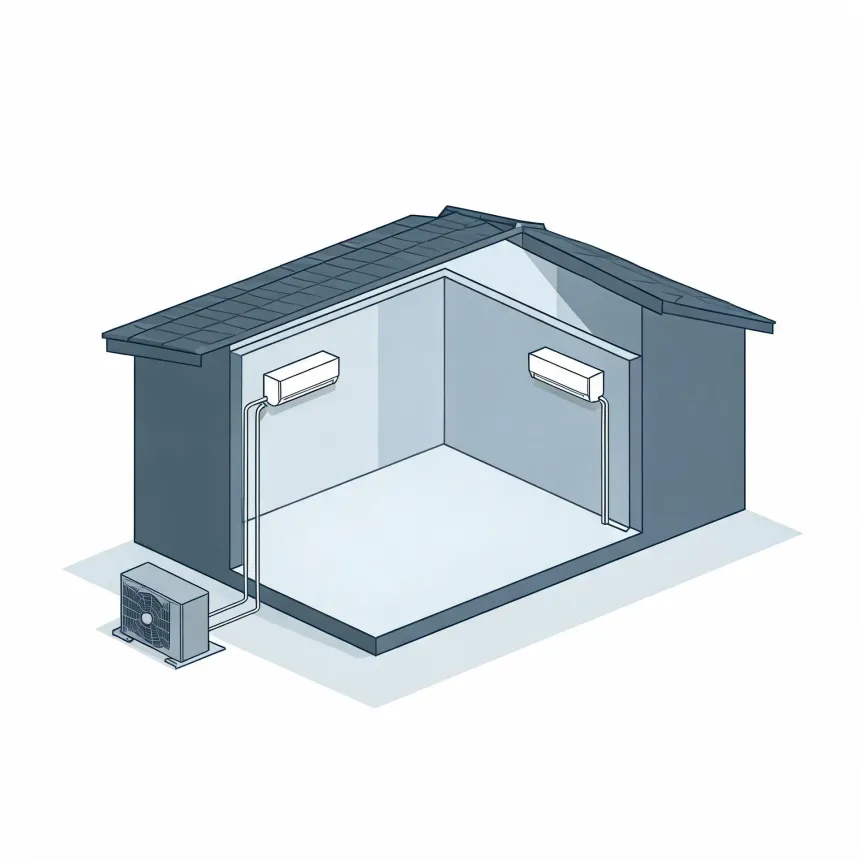
- A single outdoor unit can run one indoor head or several, so the number of rooms depends on which system goes in. A single-zone system heats and cools one room or open area. A multi-zone system runs several indoor heads off one outdoor unit, each with its own thermostat, so different rooms can sit at different temperatures. A contractor sizes the outdoor unit and the number of heads to the square footage and layout of the house.
- Can a mini split heat a whole house?
- Yes, with enough indoor heads placed in the right rooms, a mini split system can heat a whole house. Each zone heats the room it's in, so an open floor plan covers more area per head than a house cut into many small rooms. Greenville needs heat from November through March, with winter lows averaging 37°F, and a properly sized system keeps up through that stretch. A contractor can lay out how many zones a specific house needs to heat every room.