
HVAC Installation in Southaven, MS
A new system here will heat from November through March and cool from May through September every year. Tell us about the house, and a licensed contractor who covers DeSoto County will get in touch.
Tell us about the job
It takes about a minute.

Southaven asks a new system to work most of the year
A heating and cooling system in Southaven works ten months out of the year. Heat from November through March, cooling from May through September. Winter nights average 34°F, mild compared to points north, but summer afternoons average 90°F and that heat sits for months, not weeks.
A new system here has to handle both ends well, not just one. 55.3% of homes in the area heat with gas, so the furnace side of the job matters as much as the air conditioner. Storms are part of the picture too. Southaven has seen 14 winter storms and 50 damaging wind events over the past ten years, and across Mississippi 30% of households lost power for at least a day in 2024. A system that comes back on by itself when the power returns is worth asking about when you're choosing what goes in.
- 5 months
- November through March, your system heats
- 5 months
- May through September, it cools
- 34°F
- the average winter night it heats against
- 90°F
- the average summer afternoon it cools against
NOAA nClimDiv, 1991–2020 normals
Mississippi requires HVAC contractors to hold a state license.
The state tested this contractor before handing out that license, and the Board of Contractors keeps a record of who holds one. That license belongs to the contractor, not to any single job, so it does not get reissued or rechecked each time a crew shows up to install a system.
For the install itself, the license is what stands behind the work in DeSoto County. On top of that, most cities and counties here require a permit for a job like this, replacing a furnace and air conditioner or heat pump, and the local building office sends someone to inspect the work once it is done. That inspection is separate from the license. It is the check that the new system was put in correctly at your address.
Source: Mississippi State Board of Contractors
- When should I replace my HVAC system?
- Look at how the system has been behaving, not just its age. If it's breaking down often, struggling to keep up, or your contractor is quoting a major repair, replacement is usually the better move. Ten months out of the year here call for either heat or cooling, so a system that's already struggling has little time to rest between seasons. A contractor can look at the specific unit and tell you whether repair still makes sense or whether it's time to replace it.
- Should I replace my furnace and air conditioner at the same time?
- If both are old, it's often worth doing together. A furnace and air conditioner installed at different times don't always match well, and a mismatched system can run less efficiently than two units built to work as a pair. Winters here average 34°F and summers average 90°F, so both sides of the system get real work every year. If one is much newer than the other, a contractor can tell you whether it makes sense to wait or replace both now.
- What happens during an HVAC installation?
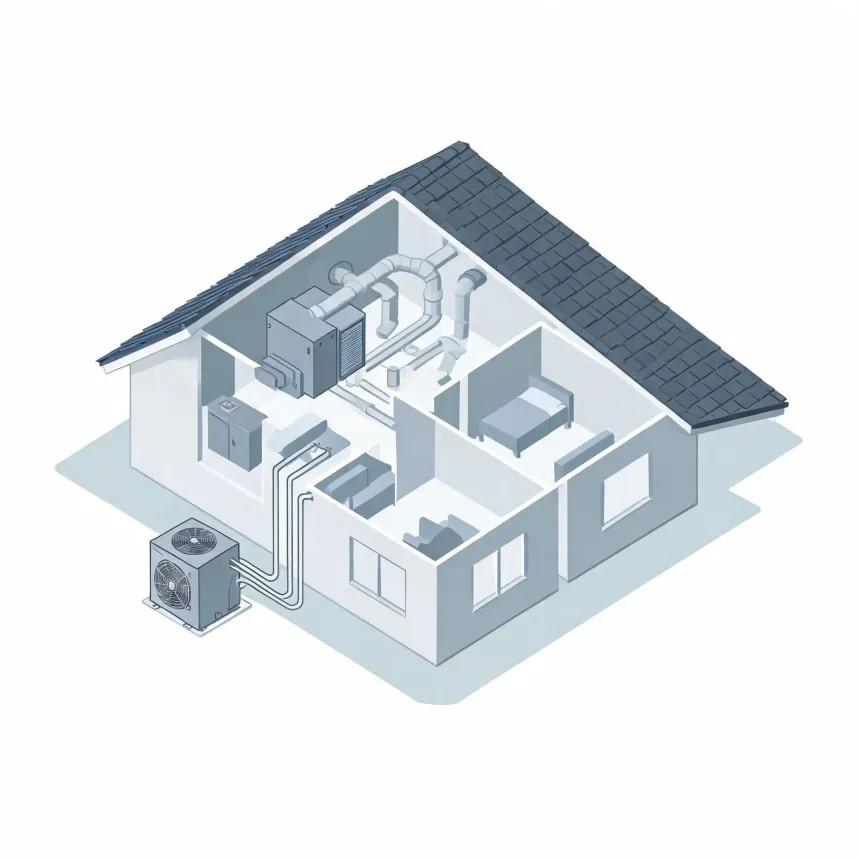
- A contractor removes the old furnace, air conditioner or heat pump and sets the new equipment in place, then connects it to the ductwork, wiring, and refrigerant lines or gas line. They test the system to make sure it starts up, heats or cools properly, and shuts off the way it should. Most cities and counties require a permit for this work, along with an inspection once it's done. Your contractor can walk you through what your local building office requires before the job starts.