Heat Pump Repair in Brookhaven, MS
Homes here need heat from November through March and cooling from May through October. If your system quits, tell us what it's doing and a licensed contractor who covers Lincoln County will get in touch.
Tell us about the job
It takes about a minute.
In Brookhaven, your heat pump barely gets a break
Eleven months out of the year, your heat pump is either heating or cooling the house. Summer afternoons near 91°F push it to run long stretches to keep up, and winter nights averaging 39°F mean it's cycling on through the cold months too. There's no real season off, just a switch from one job to the other.
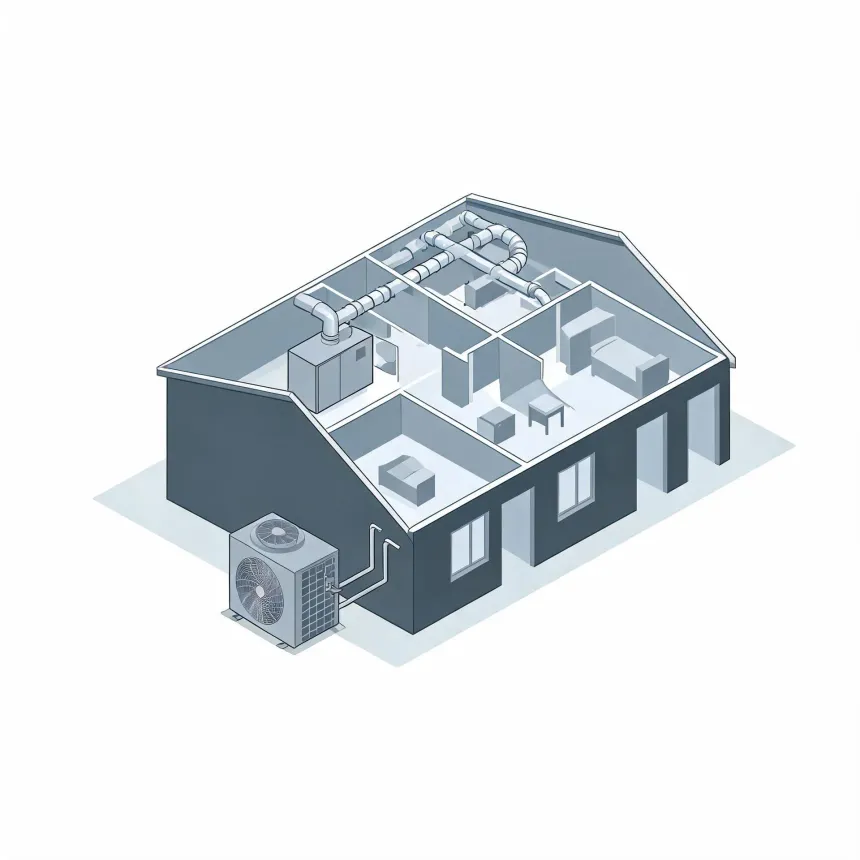
That kind of year-round run time wears on the compressor and the reversing valve, the part that switches the unit between heating and cooling. When the reversing valve starts to stick, you'll notice the system blowing warm air when you asked for cool, or the opposite. Lincoln County also sees its share of damaging wind, 79 events over the past ten years, which can knock loose the outdoor unit's electrical connections or damage the fan. If the power has been out at your place, as it was for close to a third of Mississippi households at some point last year, check that the unit actually restarted. Some do, some need a reset.
- 5 months
- November through March, your system heats
- 6 months
- May through October, it cools
- 39°F
- the average winter night it heats against
- 91°F
- the average summer afternoon it cools against
NOAA nClimDiv, 1991–2020 normals
Mississippi requires HVAC contractors to hold a state license.
The license belongs to the contractor, not to this particular repair. Mississippi's State Board of Contractors tests and records the person or company, and that record stands behind whatever work they do, on this heat pump or any other job they take on.
A heat pump repair almost always means opening the refrigerant side of the system, and federal law requires anyone who does that, in every state, to hold EPA Section 608 certification. That certification is separate from the Mississippi license. One says the contractor is on record with the state. The other says the technician is trained to handle refrigerant without venting it into the air or damaging the system.
Source: Mississippi State Board of Contractors
- Why is my heat pump blowing cold air?
- In heating mode, a heat pump often blows air that feels cool even when it's working right, since the air coming out is usually cooler than your skin but still warmer than the room. If the air is actually cold, check that your air filter isn't clogged and that outdoor unit isn't blocked by leaves or debris. It could also mean the system has lost refrigerant or the reversing valve is stuck in the wrong position. A contractor can check the refrigerant charge and test the valve, since that work requires EPA 608 certification to open the sealed side of the system.
- Why is there ice on my heat pump?
- Some frost on the outdoor coil during cold weather is normal, and the unit should melt it off on its own through a defrost cycle. If ice is building up faster than it melts, or you see solid ice rather than light frost, airflow across the coil is probably blocked. That can come from a dirty filter, a coil crusted with dirt, or a fan that isn't turning. It can also mean the refrigerant charge is low, which a contractor would need to check directly.
- Why is my heat pump running but not cooling?
- If the outdoor unit and indoor fan are both running but the air isn't cold, the system likely isn't moving refrigerant correctly. A dirty air filter or a coil covered in dirt can block enough airflow to stop the system from pulling heat out of your home. Low refrigerant from a leak is another common cause, and that only shows up as weak cooling rather than the system shutting off entirely. Since summer afternoons here average 91°F, a cooling problem in the middle of that stretch is worth having looked at rather than waiting to see if it clears up on its own.